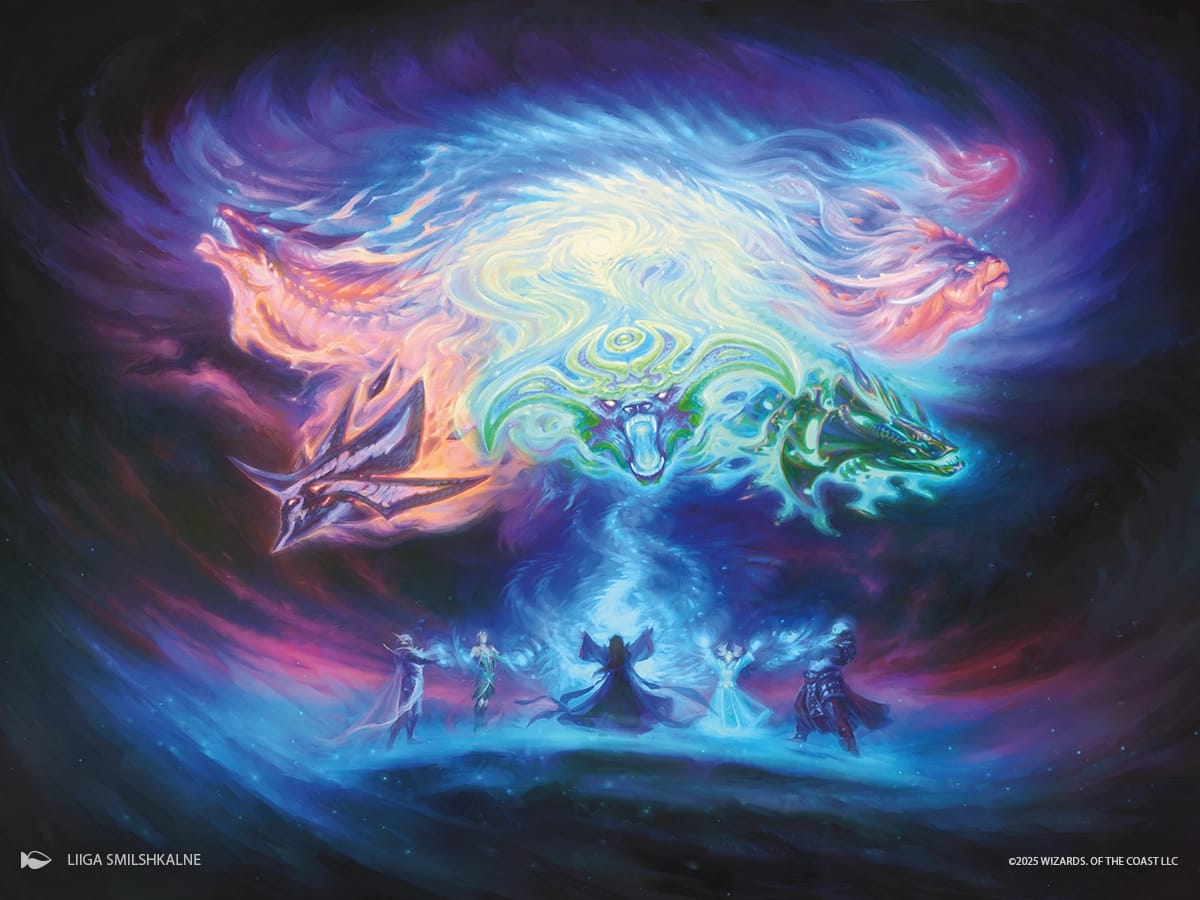
Tarkir: Dragonstorm (TDM) Limited Guide — Multicolor

Note: This article was translated from Chinese by AI and may contain errors. Read the original Chinese version.
Tarkir: Dragonstorm (TDM) will hold its prerelease events on April 4, 2025, and launch officially a week later on April 11, 2025. Want to know more about the card ratings and advice for individual cards in Limited? Then check out this series of TDM Limited guides!
- For the mechanics, see this article: Tarkir: Dragonstorm ~ Mechanics Breakdown
Before We Start
For this TDM Limited series, we are returning to putting multicolor in the first article, to spend more time introducing the characteristics of this set’s color combinations, the top-down design, and how TDM prerelease boxes differ from those of other sets. We hope this makes it easier for readers to understand how this Limited format works and what matters in it. If you just want to see the multicolor ratings, jump straight to the ratings! At the very start of each color combination there is the author’s Takeaway for it, which serves as small deckbuilding advice for readers.
Without further ado, let’s go!
Color Combination Introduction
The Five Clans
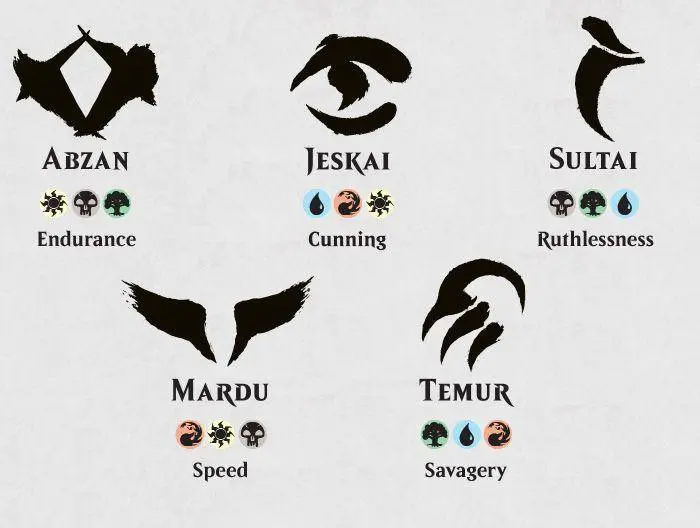
- Abzan Houses: White Black Green
- Jeskai Way: Blue Red White
- Sultai Brood: Black Green Blue
- Mardu Horde: Red White Black
- Temur Frontier: Green Blue Red
Each of these five clans has its own corresponding three-color combination, commonly called wedge color combinations, because on the MTG color wheel each is formed by one color together with the two colors enemy to it. For example, the Abzan Houses are centered on black, connected to white and green.
In addition, for readers interested in the five clans of Tarkir and their story background, besides the official story of this set, TDM, we also highly recommend further reading in the articles on the Dominaria Library:
- Dragon Souls Faint, Bones Frozen in Snow: The Story of Khans of Tarkir
- Dragons Battle the Wilds, Stone Turns to Cocoon: The Story of Fate Reforged
- Dragons Soar to the Heavens, Shadows Cloak the Sky: The Story of Dragons of Tarkir
- Dragonfire Scorches the World, Demons Eat the Heart | The Story of Tarkir: Dragonstorm (Part 1)
Top-Down Design
This content mainly draws on the TDM entry on the MTG Wiki, with its structure adjusted to better fit each clan’s representative traits.
“Top-down” design means set design led by the setting and flavor. I learned this concept from the official article Nuts & Bolts #10: Creative Elements. Why do we need to understand top-down design? Because it is the fastest shortcut to understanding the themes and structure of a Limited format! And I think TDM’s design this time is quite representative.
From the three-color mythic rare Spirit Dragons, we can imagine the strongest possible form of each clan in Limited; from the fixing creatures at common and the clan monuments at uncommon, we can see how these basic cards serve each clan to make sure the clan mechanics run smoothly. Running through all of it are the clansfolk living in the Tarkir timeline, their leaders, and the legends of past eras (linking to the story of the 2015 Tarkir trilogy), as well as the Stormborn creatures born from the Dragonstorm.
Guildmages’ Forum has also put together the following table, hoping it helps readers understand, and feel free to come back and check it whenever you forget!
Note: Because the table below is large, mobile readers who find the table content cannot be fully displayed can rotate the screen from portrait to landscape and swipe the table left to see all five clans.


Seeded Booster Returns — The Limited-Friendly Design of the TDM Prerelease Box
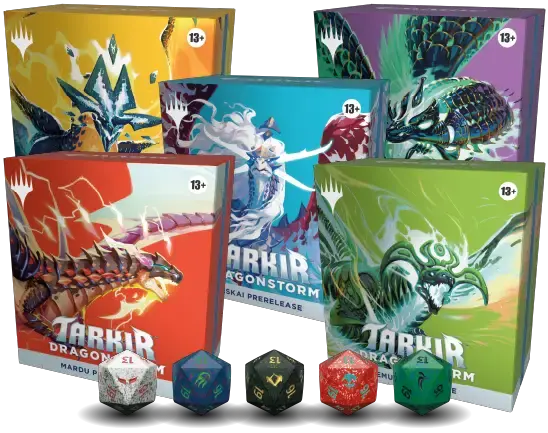
Playing Limited in a three-color environment is relatively difficult, but fortunately this time the TDM prerelease kit has a special design that basically locks you into a three-color combination as soon as you choose a theme. Each prerelease box includes the following:
- 5 regular TDM packs (Play Boosters)
- 1 clan-themed TDM Seeded Booster, containing 14 cards
- 1 prerelease foil
- 1 cardboard deck box
- 1 twenty-sided die corresponding to the five TDM clans
The Seeded Booster is not a new design; it was already used in Return to Ravnica (RTR) in 2012 and Khans of Tarkir (KTK) in 2014, and its return this time is to lower the difficulty of building decks in the three-color Limited environment.
Note: Interested readers can further read this article: WotC Seeds a Volatile Old Trick into Tarkir: Dragonstorm Prerelease Kits
Rating Scale
5.0: An unconditional must-pick, bringing a near-winning advantage
4.5: An unconditional must-pick if you’re in the right colors, bringing a big advantage
4.0: Has first-pick value, has excellent synergy with the color combination’s theme, and can be the deciding card for going multicolor / switching colors or entering the color combination
3.5: The set’s top U and C cards and other cards of sufficient power, with good synergy with the color combination’s theme, and can be a key card for entering the color combination
3.0: An important card for the color combination’s theme, and other above-average cards that you’d want in your final deck
2.5: Average, usually a decent curve filler
2.0 to 1.0: Below average, generally leaning toward not playing; can be used as filler when necessary but not too many
0.5 to 0.0: Unplayable, basically don’t play it, since playing it only helps you lose
Card Ratings
Abzan Houses — White Black Green
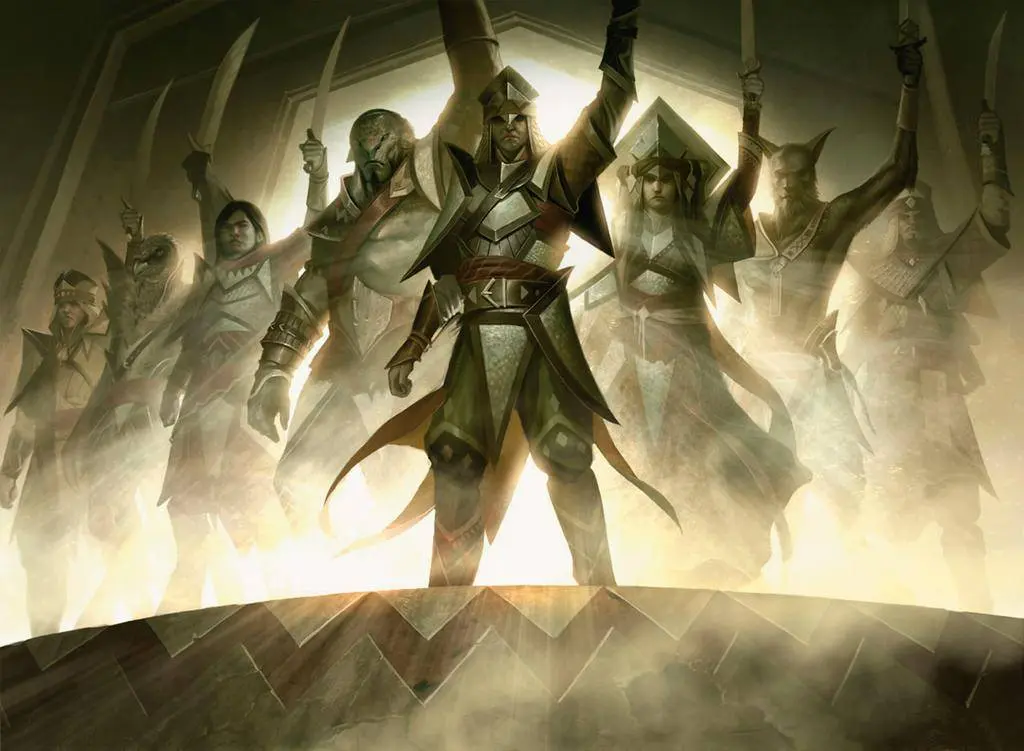
Takeaway: the Endure ability, and synergy with putting counters for extra effects, plus this color combination’s all-purpose removal, creature sizes, and excellent ability to create tokens, should be the core way this combination runs. When choosing cards, also watch whether they fit with the above themes. In addition, if you lack enough dragons, you may also need to add some reach creatures or removal to wage an anti-air campaign.

Score: 4.5
Comment: In Abzan, basically when you cast it you should have a chance to draw an extra card every turn, and the rest depends on how well your army develops.

Score: 2.5
Comment: I think it’s a card weaker than its mythic-rare tier, for the following reasons:
- It costs six to cast, and it needs enough strong bombs in the graveyard to be strong, requiring some self-mill or creature trades to meet the condition
- It is hard to obtain in Limited
- Setting aside the floor of only digging up a land, spending six mana to bring back a 3/3 or 4/4 hexproof indestructible creature isn’t the result you wanted from putting it in your deck and spending six mana.
But considering its ceiling, I still give it an average rating of 2.5.

Score: 3.5
Comment: Becoming a 4/4 trampler on entering already pays for its cost, and it is very well suited to Abzan, which is good at making tokens.
Small tip: When it attacks together with a creature with Mobilize from the black-white combinations, resolve the Mobilize token creation of a 1/1 first after attackers are declared, and then resolve this card’s attack-trigger sacrifice-and-put-counters effect, and you can eat the freshly created 1/1 to make your other creatures grow another size!

Score: 4.0
Comment: Everything Abzan needs is in this Saga. Chapter I creates three 1/1s, chapter II puts three counters anywhere among up to three target creatures, and chapter III also gives trample and lifelink; the creatures you fattened up earlier are now just right for a big charge!

Score: 3.0
Comment: A 3-mana 3/3 deathtouch whose enter-the-battlefield effect exiles a nonland card from the opponent is very strong, basically a one-for-two. But when it leaves the battlefield you have to create an X/X creature, and that side effect is still not small. If the exiled card is an expensive one, you’ll need another answer for defense. If the exiled card is a cheap answer, you worry less.
If the exiled card is an Omen-type answer or a card with hybrid mana, pay special attention that after the opponent removes it, they will get back a big creature.

Score: 3.5
Comment: Bringing along a second creature is very strong, but milling 4 cards sometimes costs you a trick or a high-cost card you want, so when building, pay a bit of attention to the number of creatures at mana value 3 or less versus more, and some graveyard recursion cards.

Score: 3.0
Comment: One card unlocks the counters theme, and even just casting it for its own six mana to get a 6/7 flying dragon is enough. It is a very good top-of-curve card for Abzan; I didn’t give it a higher score because of its cost.

Score: 3.5
Comment: Considering that many threatening cards in this set cost 3 or more, and every color combination touches at least one of those colors, it can be cast for five at worst, so it should be the most stable and versatile hard removal.

Score: 3.5
Comment: A miniature version of Siege Rhino. Basically a 3-mana 3/4 trampler already has strength, but this set has no drain-and-gain theme, so the ETB shouldn’t be key, though you can occasionally pick up a kill.

Score: 2.5
Comment: It’s only somewhat better when cast on turn three, but if you have no counter source you still have to play it.
Jeskai Way — Blue Red White
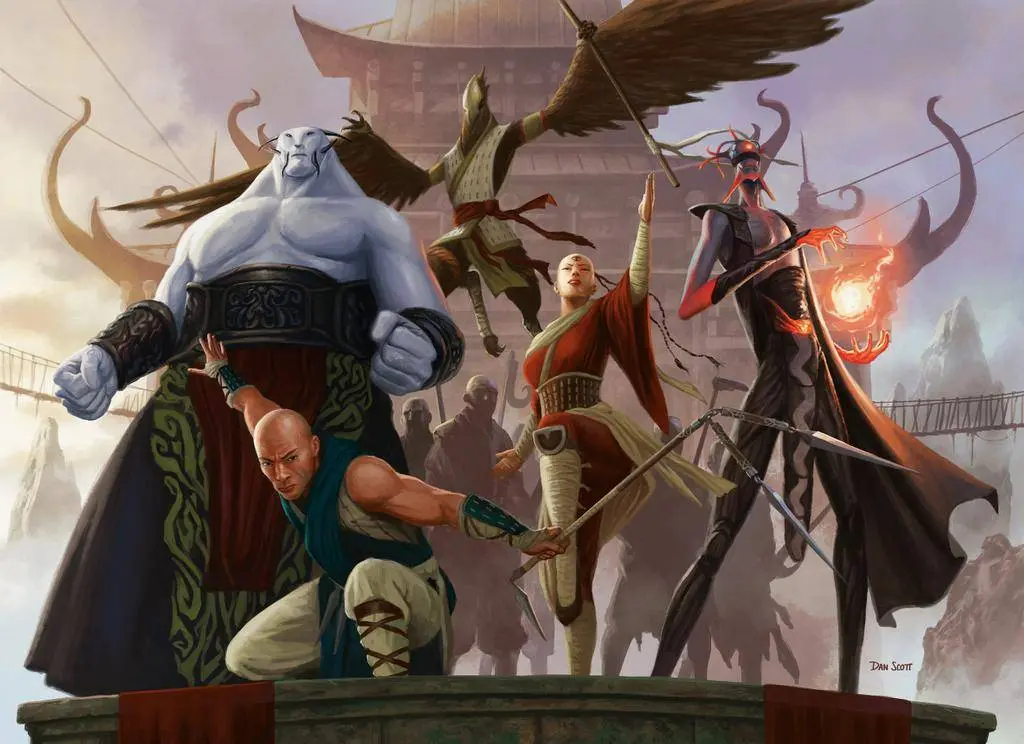
Takeaway: the Flurry ability is not only the set’s thematic mechanic but also the core way this combination runs. With creatures designed to have fairly ordinary sizes, the key for Jeskai to stand out in Limited is how to use creatures’ built-in Flurry effects to keep casting spells and take over the board. 1+1 is absolutely greater than 2, and Jeskai shows this to the fullest! In addition, you can also bring some red/blue dual-color Harmonize cards to lie in wait in your hand/graveyard as Flurry trigger sources.
This set has some cheap, repeatable spells, such as the blue Wingspan Stride
or the red Fleeting Effigy
, which let you keep triggering Flurry effects even when your hand runs dry. When entering this combination, don’t forget to pick up some cards of this kind!

Score: 4.0
Comment: A five-mana 4/5 vigilance dragon is not weak, but getting its ability to work well may depend on the situation; of course, casting a dragon plus copying a spell of mana value 3 or less from the graveyard is still great.

Score: 4.0
Comment: By comparison, it’s a bit like an easier-to-cast Jeskai version of Cruel Ultimatum , but its instant nature may be closer to Magma Opus
 , so it’s worth a first pick! Seven mana for a five-or-more-for-one is still wildly crazy! But taking it means that during the rest of the draft you must actively take some reasonable acceleration cards, to avoid this strong card staying stuck in your hand.
This time you don’t need to stack your top deck to cast it at seven mana first XD —> Gabriel Nassif’s Called Shot

Score: 3.5
Comment: Zhuge Liang’s village wife… oh wait, I mean Narset. This card’s strength lies in encouraging you to empty your hand through Flurry and then rewarding you with card draw, making it a card dedicated to the Jeskai theme.

Score: 3.0
Comment: In any case, it’s a three-mana card that filters 6 cards over two turns, which is deep enough. Chapter III, casting a noncreature spell to give double strike, only applies to the target creature, so it may not help much when behind.

Score: 3.5
Comment: A 3-mana 3/3 first striker is quite strong, so pick it up early in the Jeskai Flurry theme. If you want to copy spells, remember to cast it first.
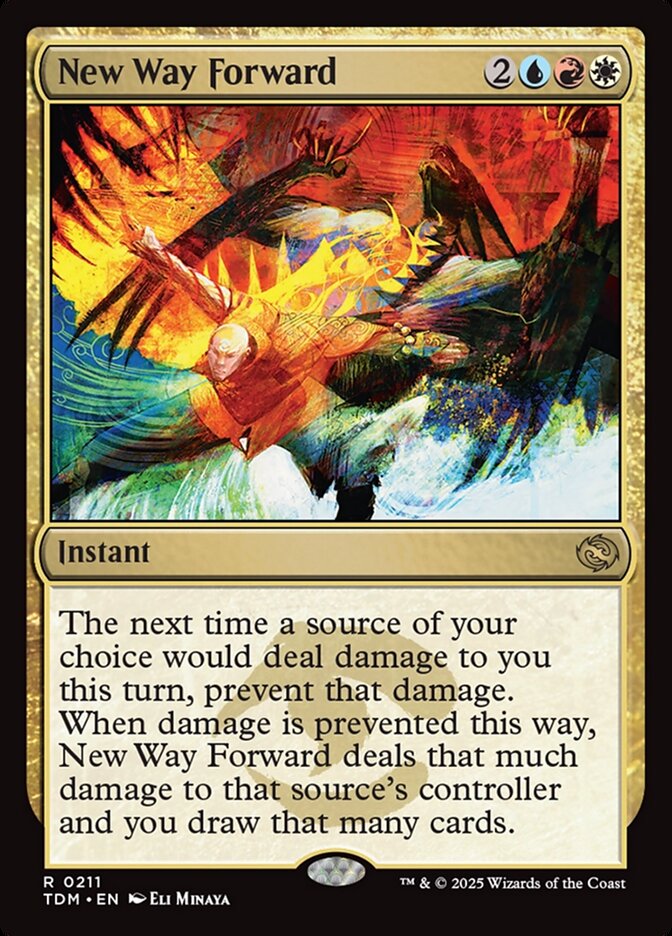
Score: 2.5
Comment: This card has no target! No target! No target! As a big Deflecting Palm it looks attractive at first, but having to keep five mana open at all times is still too tempo-costly in a Limited format with few flash creatures, and the opponent, seeing you play this color combination, can fully play around it. It’s the kind of card that you can put in as the 23rd card in the main deck and usually take out after sideboarding when on the draw.
Small reminder: If the source damage this card prevents is greater than your library, uh… just don’t cast it. The best case is a draw after resolution (reflected damage kills the opponent + you deck yourself), so losing there would be too silly XD

Score: 3.0
Comment: The ability is very powerful, but it has to connect. A five-mana flying haste creature with no self-protection ability; I feel you still can’t use too many.

Score: 3.0
Comment: A Jeskai-specific tool. Even cast for four mana to Stun a threat for three turns, plus the look-at-two-pick-one effect on the next turn’s cast, it feels very comfortable!

Score: 3.0
Comment: A four-mana 2/4 double-strike prowess creature; think of it as a Riptide Gearhulk with no enter-the-battlefield effect, one mana cheaper, and one less toughness. It still hurts when it connects.

Score: 2.5
Comment: Considering that some of the cards used to fill noncreature slots will be Omen cards, which shuffle back into the library after use, there may not always be something to pick up when you cast it, and it puts the card on top of the library, so it isn’t as good. But its size is decent, and with a few counters or a pump it can still attack and block, which is good enough for a common.
Sultai Brood — Black Green Blue
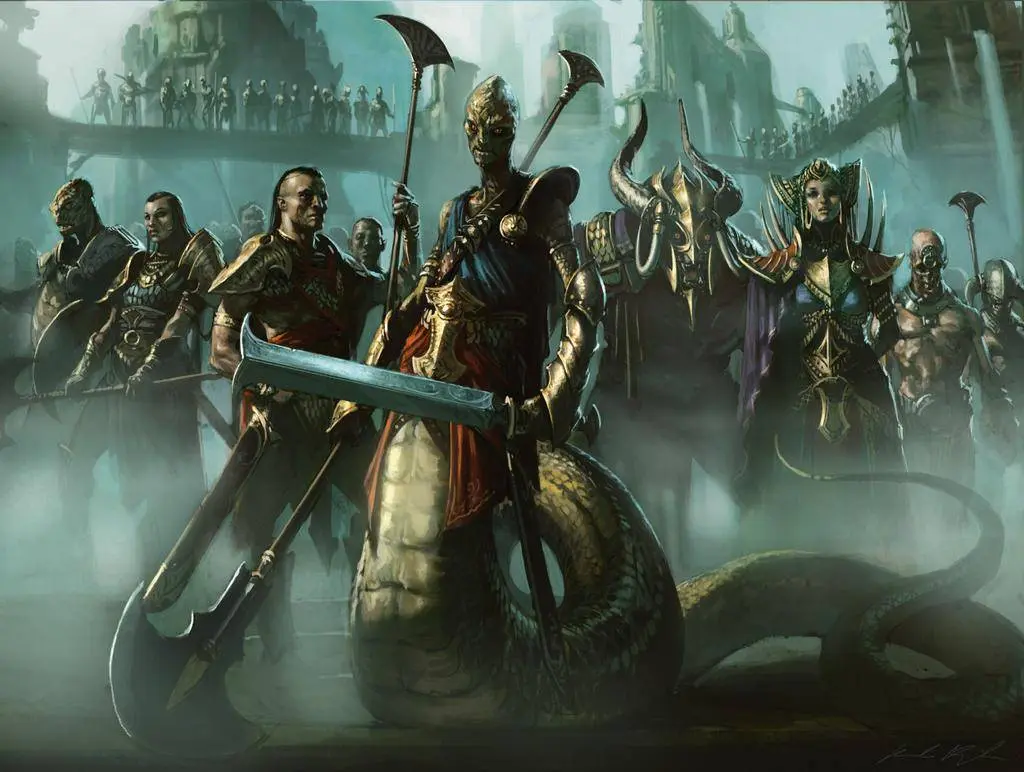
Takeaway: the Renew effect, which exiles a creature card from the graveyard to put counters, supports two non-keyword themes at the same time:
- Caring about putting counters, or permanents having counters on them (black-green)
- Caring about cards leaving the graveyard (blue-green)
However, how do you get Renew cards into the graveyard? Relying on creature trades alone is too inefficient, so we need to return to the Sultai trait: Mill. A well-built Sultai deck, besides the two types of cards mentioned above, still needs to watch whether it includes graveyard recursion / graveyard-digging effects, to make sure that over-filling the graveyard doesn’t leave it unable to draw the cards it needs from the library.

Score: 4.0
Comment: Gives lifelink and a quality 5-mana 6/6 body, but note that you can’t be too happy trading life early on, and your deck’s spells may also need to keep their costs under control.

Score: 3.0
Comment: Very strong! But I’m afraid you’ll deck yourself with it…

Score: 3.5
Comment: Very strong when it connects, but the premise is that it has to connect; without pump it will keep getting blocked by toughness-3 creatures, and dying to a Desperate Measures would be a big loss. That said, Sultai’s mechanic is Renew: you can put counters when you want counters and get evasion when you want evasion, so the above problems should be mitigated in actual play.

Score: 3.5
Comment: It is worth this rating just for entering; afterwards, milling three cards and seeing a strong creature, then triggering chapter III by drawing, lets you discard a useless card to pick the creature back up. At worst you can pick up a land, and it can also trigger effects that care about cards leaving the graveyard.
Note: Standard Golgari “farming” decks (the ones that plant counters) are probably just missing a card like this

Score: 3.5
Comment: Privately I’d like to give it 4.0, but alas the three specified colors can still get stuck. Just think of it as an Ertai Resurrected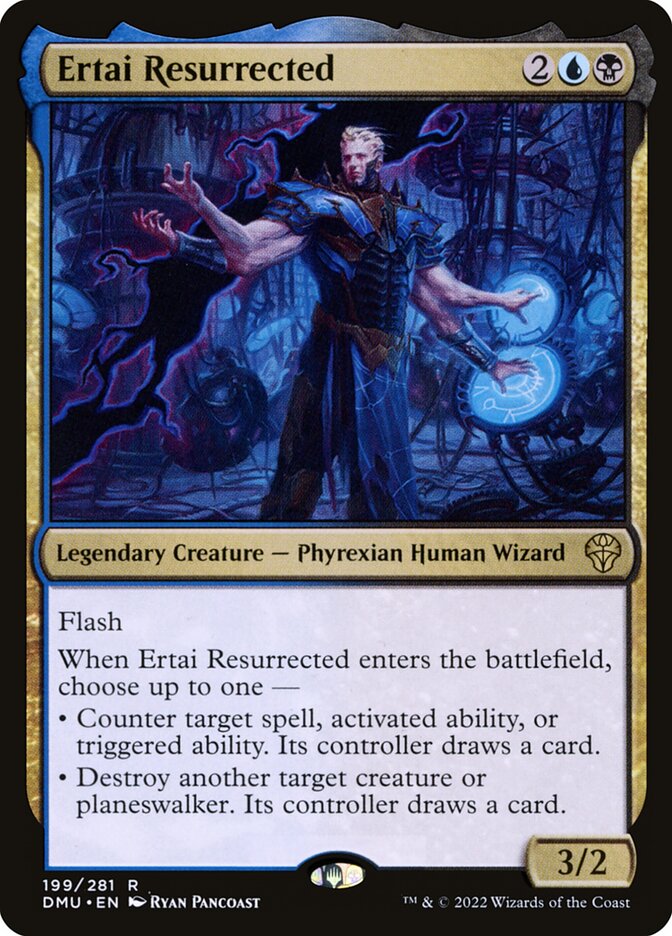 that doesn’t lose cards and even gains cards.

Score: 3.0
Comment: A 5-mana 3/6 lifelink body is extremely supreme, but Entomb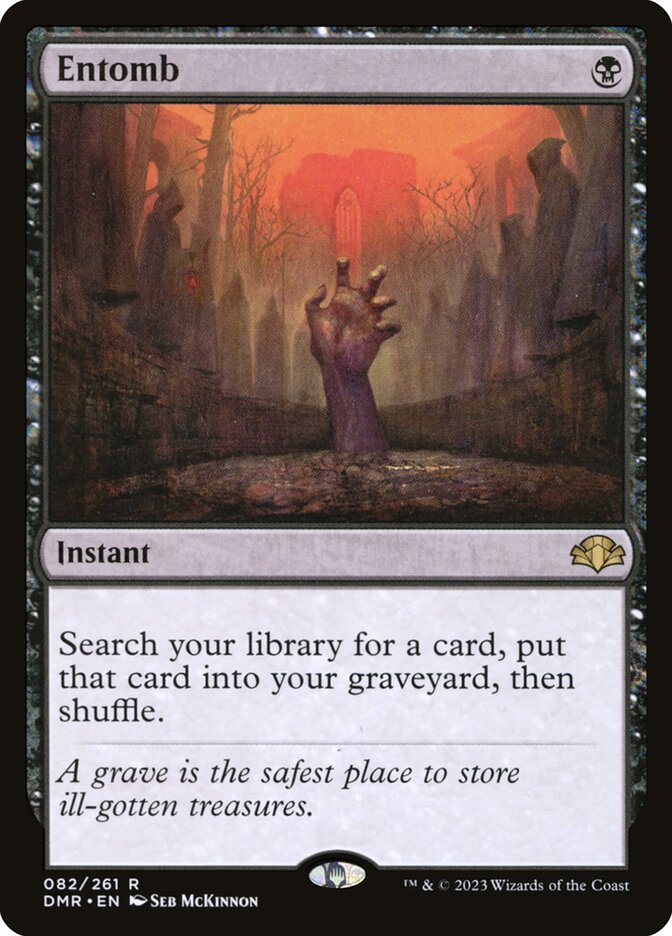 for three cards into the graveyard needs support to be strong, otherwise having three fewer cards in your library may not be great.

Score: 3.0
Comment: You might use the Treasures it creates to help fix for five colors, and Renew is also strong.

Score: 3.0
Comment: A lubricating good card; stuck on one color and cast for four is also okay.

Score: 3.0
Comment: Pick up one card and kill one creature, with a chance to trigger the cards-leaving-the-graveyard theme. A strong card for playing Sultai.

Score: 3.0
Comment: Playing two colors and casting it for four is also not weak, a quality filler creature.
Mardu Horde — Red White Black
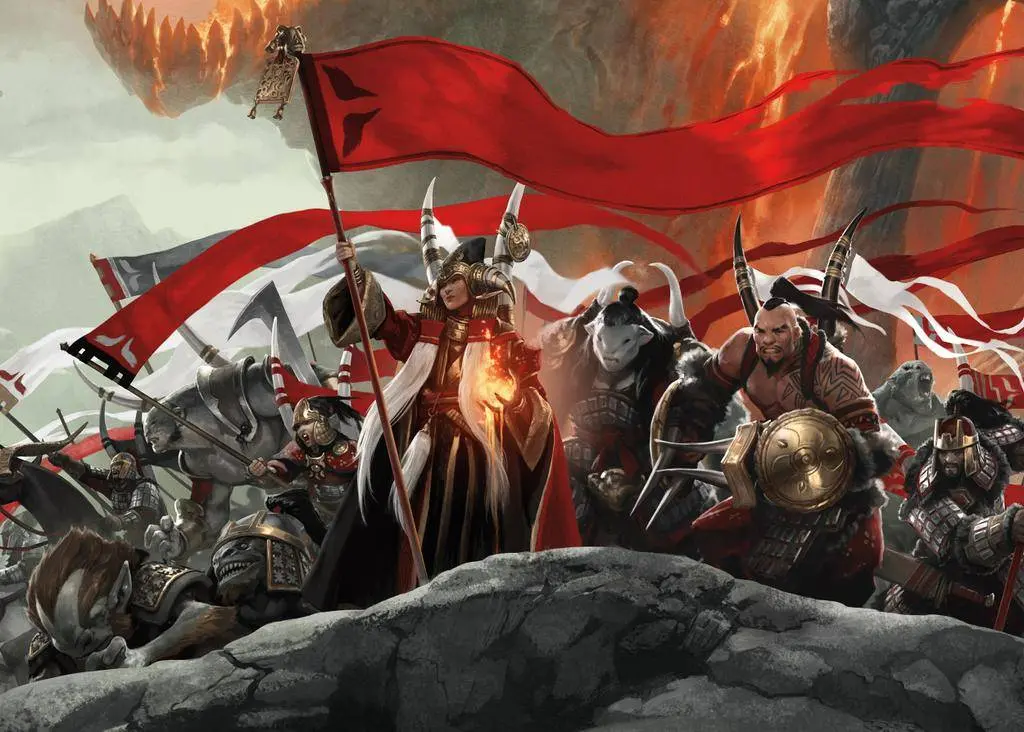
Takeaway: the Mobilize ability is absolutely the top priority for Mardu in this Limited format! But how to make the deck produce three colors on curve, or to develop the board in the first 3 turns mainly with two colors and assemble the third color by turn four to start unleashing the combination’s burst, will be the biggest key in building Mardu. Perhaps a card like Mardu Devotee
will be an important piece that decides whether this aggro combination turns over or not.
After turns four to five this combination undergoes a transformation: whether to turn to winning by dragon air raids, or turning to the extra life differential from creatures entering/dying to close out the game, or both; whether this turning point can transition smoothly without stalling will be the key to Mardu winning.

Score: 4.0
Comment: The 4.0 is mainly for its own body. To make the passive effect work well, you need to pair it with haste creatures or small creatures created by Mobilize to add damage. Pairing it with its kin Sonic Shrieker for hit 4 gain 2 is very tempting.

Score: 4.0
Comment: Pumps your whole team and gives deathtouch, plus an extra combat phase; if the opponent doesn’t hold off the first wave, they’re probably dead.

Score: 3.0
Comment: The ability is quite strong and the 2/4 body isn’t easy to remove, but in Mardu, whose color requirements are relatively harsh, whether you can cast it on turn three will be a test of its strength.

Score: 3.5
Comment: Mardu Mobilize-only; it draws cards on entering, and chapters II and III pair with the Mobilize theme to generate a large life differential.

Score: 3.0
Comment: It seems very strong… but a four-mana three-color catch-all may still be a bit hard to use; if you’re not playing Mardu, don’t take it. Draining 3 can sometimes be used to finish the opponent off.

Score: 4.0
Comment: Super strong. A 4-mana 4/4 deathtouch haste creature can often deal surprise damage, and exiling one of your Mobilize creatures that lacks evasion on entering should be a common choice; if you pair it with a creature that has a positive ETB, even better!
Score: 3.5
Comment: The body is a qualified 5-mana 4/4 flier, and a small Lightning Helix on entering to remove a creature, or hitting the opponent’s face to make them discard, is very strong. This should be a very excellent top-of-curve card for Mardu.

Score: 2.5
Comment: As removal it’s a bit clunky, and there should be better options. But from the perspective of casting it for four mana in two colors, it supports three color combinations; if you’re in those colors and still lack removal you can take it, but no need to take it too early.

Score: 4.0
Comment: Attacking creatures have deathtouch, which greatly increases the chance that your Mobilize creatures survive combat.
Butcher of the Horde
: What killed me was not time or disease but someone stronger than me, how wonderful! (Hint: that pile on the ground…)

Score: 3.0
Comment: The enter-the-battlefield ability lets other Mobilize creatures that came out earlier get a free hit. In a color combination like Mardu that focuses on attacking, it’s the kind of card that gets stronger the more copies you take.
Temur Frontier — Green Blue Red
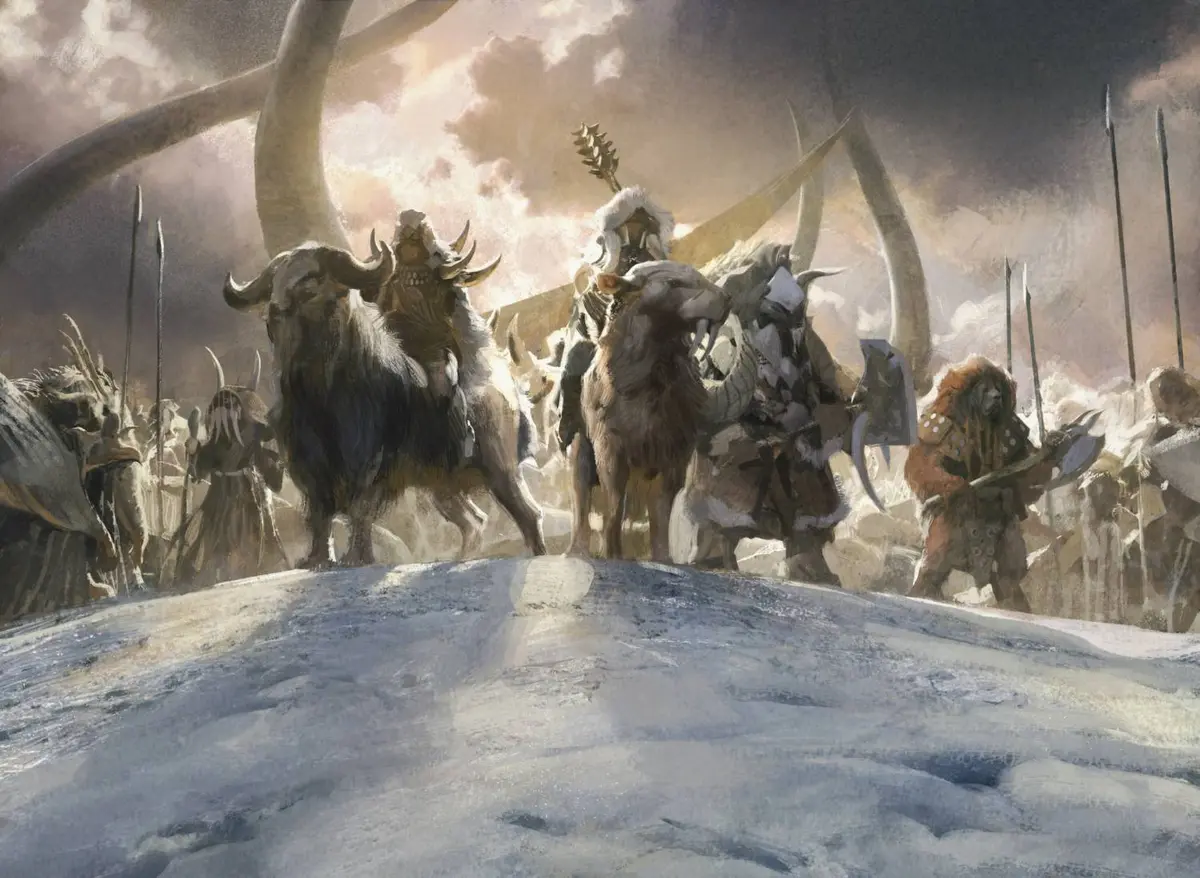
Takeaway: the Harmonize ability is a bit of icing on the cake on top of an essence that already has the advantage in size and the resource war, and of course Temur’s creatures’ high power can easily reduce Harmonize costs. However, this combination’s key is still quality-sized creatures, trample, and moderate disruption and removal. Many creatures come with built-in card-advantage/filtering ETBs, and combined with the mid-to-late-game resource boost from Harmonize cards, this makes individual card quality in this combination look especially excellent by design.

Score: 4.5
Comment: A super-evolved Dragonlord Atarka , and it is also protection from white and black, making it super hard to kill! Because it costs eight, points have to be deducted, but its strength is a 5.0, and after it resolves it’s hard to lose.

Score: 4.5
Comment: A medium sweeper + a landfall 4/4 flying dragon. In Temur, which is good at ramp and fixing, casting it on turn five is not difficult; and after it resolves you can start earning a lot of advantage! However, to trigger landfall reliably, apart from the five dual-color fetch lands from SPG that are hard to obtain, you have to rely on cards like Evolving Wilds or others that fetch a land to hand or onto the battlefield.
Note: Dealing 3 damage in this set should be able to kill more than 60% (99 of 148) of the creatures, which is quite enough!

Score: 4.0
Comment: Cast for four, it keeps the tempo and board from slipping, and it encourages you, after casting it, to cast a creature + a noncreature spell at least before the next turn’s combat phase, which widens the card advantage and size (4/4 —> 6/6) advantage. Vigilance, trample, ward one. And if you can slam it down on turn five or six on the same turn and add a cheap noncreature spell, the beginning of combat can also trigger its effect. As long as you have the pairing, it’s very strong whether cast on time or a bit later, worthy of being the current Temur khan!
Note 1: Imagine how strong it is to slam it down on turn five + Harmonize Winternight Stories
from the graveyard!
Note 2: Be aware that you must cast at least one creature spell and one noncreature spell in total during the precombat main phase; casting only a creature spell and casting the noncreature spell after entering combat does not satisfy its trigger condition.

Score: 4.5
Comment: Worthy of an R card, it is stronger than the U card Mammoth Bellow by more than one tier; after chapter III resolves and you attack, you should be close to winning.

Score: 3.5
Comment: After it resolves, the spells you cast on your own turn all become very efficient.

Score: 3.0
Comment: As a successor to Snapcaster Mage , is the fat Snapcaster powerful in Limited? A few points of analysis:
- You basically won’t cast it for three, but you can consider it if you need to catch up on tempo
- Entering in the mid game and giving a target spell the Harmonize ability, you can directly tap it to reduce the cost by at least 3; entering on turn four or later and then using a single-color spell is very good
Overall it still looks quite good, but since it’s tied to a color combination, I’ll give it an above-average 3.0 for now.

Score: 4.0
Comment: Basically a big flying dragon with hexproof on entering; to kill it you have to let it hit you first, which is too painful.
Palladia-Mors, the Ruiner
cries herself unconscious in the bathroom XD

Score: 3.0
Comment: Double power and toughness, then fight; very Temur.
Score: 3.0
Comment: An evolved Call of the Herd . Don’t forget that the first 5/5 Elephant it creates can be tapped to pay Harmonize’s five mana; basically it’s eight mana in installments for two 5/5 Elephants. A strong card!

Score: 3.5
Comment: Temur has Harmonize, so discarding isn’t necessarily a drawback.
Two-Color Themes

Score: 4.5
Comment: Whether you choose Abzan, putting counters on your whole team at end of turn, or Mardu, where whenever a creature dies on your turn the opponent has to sacrifice one too, as long as you choose the right situation it’s a super bomb.

Score: 4.0
Comment: If you have fliers to slowly poke with, choose Jeskai to refill your hand; if you have a pile of creatures that can swarm across, choose Temur. Both options are very strong!

Score: 4.0
Comment: If the colors are right you’ll always play it, but think it through before casting it. If you want to choose Sultai to draw cards but your other sources of counters are unstable, choosing Abzan may be better.

Score: 3.5
Comment: On the Mardu side it may be icing on the cake, but its value should be on the Jeskai side, steadily creating 1/1 lifelink haste creatures. It is useful on both offense and defense.

Score: 2.0
Comment: Paired with dragon cards with the Omen effect, it has a chance to mill the opponent out all at once in the very late game, but its meaning is a bit unclear in the early game

Score: 3.0
Comment: As a combat trick it may be more attractive than casting the creature itself, and holding it in hand can also trigger Behold, which is very nice.

Score: 2.5
Comment: A two-mana counter for two doesn’t gain mana or tempo, while the four-mana flying dragon may be a medium-sized threat in the right build, but neither side is strong enough. Not to mention that if you use the Omen side to counter early on, you may not be able to find it again the whole game…

Score: 3.5
Comment: A two-mana Omen that kills a creature with power 3 or less is already quite excellent, and a five-mana 3/3 flying dragon with removal built in is not weak.

Score: 3.5
Comment: Dealing 5 to the ground is quite enough, and in the mid to late game when you lack fliers you can also cast it normally.

Score: 3.5
Comment: The Omen side is usable by putting three counters for three mana; flashing in a 4/3 flying dragon for five makes your later dragon and sorcery spells more flexible. A strong card!

Score: 3.0
Comment: Very dependent on pairing, but once paired it can give you an endless stream of card resources! In Mardu you eat the tokens created by Mobilize and profit fully; in Abzan you can also eat extra Endure small creatures to draw cards.

Score: 3.5
Comment: Even attacking alone it’s a 4/4 deathtouch, and pairing it with fliers for a big attack, or pumping Mobilize creatures to increase their survival, is very strong.

Score: 2.5
Comment: If Flurry can happen repeatedly, it hits very fast; if not, it’s relatively weak.

Score: 3.0
Comment: Instantly creating two 1/1s, or pumping a creature, are both good; at worst it’s flashing in two 1/1s.

Score: 3.0
Comment: Slamming it down on turn four on time is already strong enough, and in the late game when Flurry triggers it gives you an even bigger 6/5 with vigilance and menace.
An echo: in OTJ Limited there was a play where you cast one Slick Sequence
and, while it’s on the stack, add a second one, and when both resolve they each count another spell and draw cards. You can likewise, while this spell is still on the stack, add another instant or flash card, and when it resolves and enters it will come with two +1/+1 counters too! (Whether it’s necessary to do this is secondary, but if you want to, you can play it this way XD)

Score: 3.0
Comment: Basically two mana to draw one, discard one, and hit a creature for three, and it can also be reused through Harmonize, which is too strong. When you don’t need to hit a creature, just use it to cycle through one card.

Score: 3.5
Comment: A qualified body that meets the counter-placing condition on its own; when it or another creature with counters dies, it can also hop the counters to another creature, so the theme’s effect isn’t interrupted. Quite excellent.

Score: 3.0
Comment: It can fight on its own, and paired with the counters/Renew theme it is very strong.

Score: 3.0
Comment: A two-mana instant that picks up a card to hand is quite flexible and very easily causes the opponent to misjudge.

Score: 3.5
Comment: A qualified body, and drawing a card or two off it is already a profit! In blue-green with Renew/Harmonize cards backing it up this shouldn’t be hard to achieve, and splashing black to play Sultai makes drawing cards no problem at all.
Five-Color Spell — Summoning the Spirit Dragons

Score: 1.5
Comment: A special way to win! But having five dragons of different colors is just too hard, isn’t it?
However, I don’t think it is a useless 0.0 card, because of its effect. Giving dragons indestructible is actually a very strong effect in this Limited format. Your dragons can unilaterally dominate the air, and that’s not all: at the beginning of your upkeep it can make your indestructible dragon pack bigger. Think about this scenario: you control a three-color dragon that has indestructible because of this enchantment, and each upkeep you can put 3 more +1/+1 counters on it!
Small conclusion: This is not a card worth taking early, but in a dragon-themed deck where you have a chance to cast it, once it resolves you may gain a huge advantage from it. It’s a card that is slow but wins. Of course, if you can’t assemble five colors, don’t consider it.
Conclusion
More than a decade ago we saw the dragonless Khans of Tarkir wage war on one another; and in the story of Fate Reforged, Sarkhan traveled a thousand years into the past to save Ugin from his fated death, turning the Tarkir timeline into an era ruled by the Dragonlords. The khans declined, the names of the old five clans were even forbidden, replaced by names bearing the two-color Dragonlords: Dromoka, Ojutai, Silumgar, Kolaghan, and Atarka.
And now, returning to Tarkir, things are the same but the people are different. The clan leaders and the Spirit Dragons born from the new Stormborn ritual joined forces to defeat the five Dragonlords and ended the era of Dragons of Tarkir. Sarkhan and Narset, once the core figures of the story, were both stripped of their sparks after the New Phyrexia invasion, and Ugin and Nicol Bolas were both released from the meditative realm that had imprisoned each other since War of the Spark; a new conspiracy will unfold across the Multiverse.
For me, the Tarkir timeline is a special timeline with a real “sense of history.” Not only does its storyline span a thousand years and two world lines, witnessing the rise and fall of dragons and humans, but its setting also passes through the features of ancient China (Jeskai), Siberia (Temur), Mongolia (Mardu), West Asia (Abzan), and the confluence of Southeast Asia (Sultai), blended into a historical conflict reenactment rich in the flavors of Asia and ceaselessly fighting among themselves.
Although Wizards clearly favors some products over others in marketing resources, as a returning timeline, whether in its tribute to the old Tarkir, the care put into the design of the three-color Limited environment, or the development potential of its cards in constructed, TDM will be one of the few great works in recent years! I believe that for upcoming constructed play, and for players who want to experience three-color Limited, TDM will be a series well worth coming back to enjoy!
- Title
- Tarkir: Dragonstorm (TDM) Limited Guide — Multicolor
- Author
- cephille
- Created at
- April 1, 2025
- License
- This work is licensed under CC BY-NC-SA 4.0 .