Avatar: The Last Airbender (TLA) Limited Review: Blue

Note: This article was translated from Chinese by AI and may contain errors. Read the original Chinese version.
Avatar: The Last Airbender will hold its prerelease events on November 14, 2025. Want to learn more about how each card rates in Limited, with recommendations? Then check out this series of TLA Limited reviews!
- For an introduction to the mechanics, see this article: Avatar Mechanics Explained
Rating Scale
5.0: An unconditional first pick that brings you close to winning on its own.
4.5: An unconditional first pick if you are in the right colors; brings a huge advantage.
4.0: Worth first-picking. Great synergy with the color pair’s theme, and can be the deciding card for splashing / switching colors or moving into the color pair.
3.5: The set’s top uncommons and commons, plus other cards of sufficient power. Good synergy with the color pair’s theme, and a key card for moving into the color pair.
3.0: An important card for the color pair’s theme, or another above-average card that you want in your final deck.
2.5: Average. Usually a decent curve filler.
2.0 to 1.0: Below average. You generally lean toward leaving it out, and can use it as filler when necessary, but not too many.
0.5 to 0.0: Unplayable. Basically don’t play it; putting it in only helps you lose.
Ratings

Score: 3.0
Comment: Looking at 3 and taking 1 at instant speed is already worth putting one in your main deck. There are quite a few Lesson cards this time, and grabbing them all at once in the mid to late game is great. Note that this card can’t trigger draw-related abilities.

Score: 3.0
Comment: If you can reduce its cost with creatures or Clues and cast it on turn 4-5, it puts a lot of pressure on your opponent, but if you tap creatures for it your defenses may get broken through. I’d consider taking it in the middle of a draft; it’s a card with a relatively high ceiling and floor.
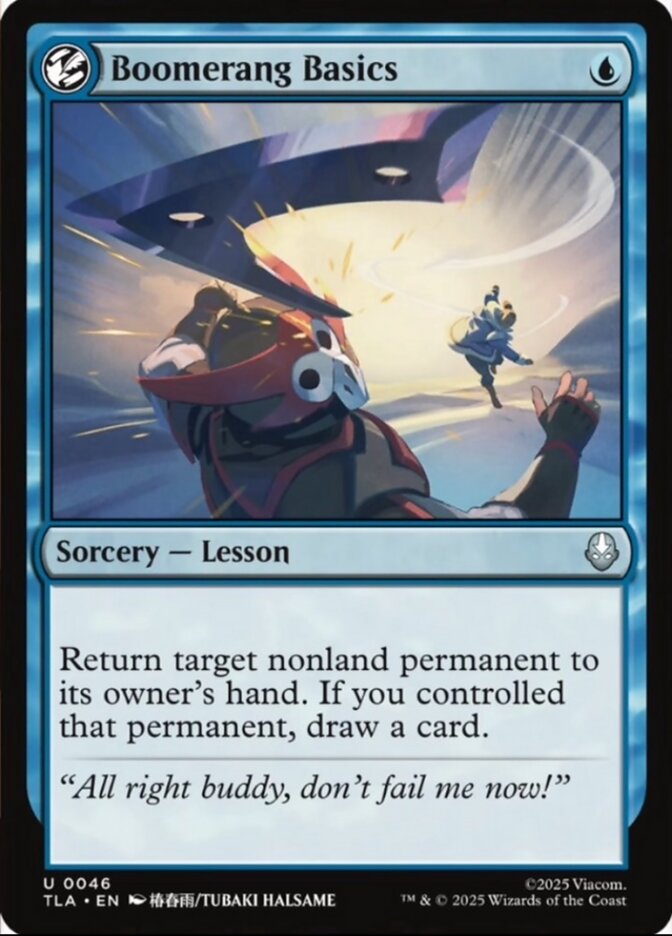
Score: 2.5
Comment: Unsummon-type cards can take part in both offense and defense in Limited, and are especially great for trading with an opponent’s trick, but this one is a sorcery and a bit weaker. Sometimes you can use it to rescue a creature that has been pacified.

Score: 2.5
Comment: Bringing one to a tempo deck can be very painful for your opponent. In Limited, cards like this get through the opponent’s defenses more efficiently than removal does.

Score: 2.0
Comment: It looks fun, but it’s almost unusable. If you copy an opponent’s creature it will only be a 2/2, and I’d rather play a normal five-drop creature.

Score: 2.5
Comment: It needs to be paired with cheap Lessons. An unremarkable common flier like this can become a main force if the conditions are right.

Score: 2.5
Comment: At first I thought a four-mana ground creature that is only a 2/5, whose only ability requires sacrificing your defenses, was poor, but considering blue has lots of fliers, you also need a defensive anchor like this.

Score: 3.0
Comment: Plain and simple, it gives a Clue, and it also provides two sources of them. A very good common.

Score: 2.5
Comment: A decent flier, but considering it’s a common and you won’t want that many five-drops, you can pick it a bit later.

Score: 2.5
Comment: It should be a good finisher in sealed, and in draft it can serve as filler.
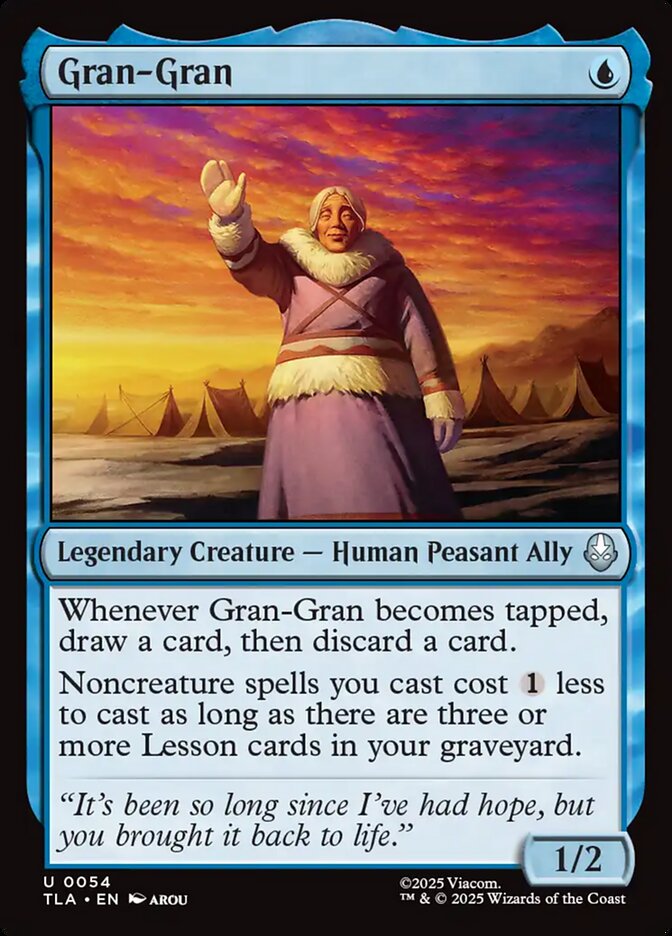
Score: 3.0
Comment: A very good looting engine, and a core piece in a waterbend-themed deck.

Score: 2.5
Comment: Use it to stick onto an opponent’s creature and gain tempo. Be careful if the opponent can produce extra mana, and it’s not suited to being cast too early.

Score: 3.0
Comment: It can steal life while also helping with waterbend, so it’s one of the top commons.

Score: 3.0
Comment: On entering, it bounces the big creature your opponent just cast, which gains huge tempo. It can also turn itself into a creature, and can help you pay for your own waterbend. A very strong tempo card.

Score: 2.0
Comment: I don’t recommend playing a soft counter that can’t solve problems in Limited, unless you are very mean.

Score: 3.5
Comment: It’s a threat your opponent needs to deal with first. It helps with waterbend while growing, and in the mid game it can pull ahead on resources through drawing cards.

Score: 3.0
Comment: A two-drop that doesn’t lose you cards is great! When I see a good two-drop I always take it first, especially since this fox can also grow!
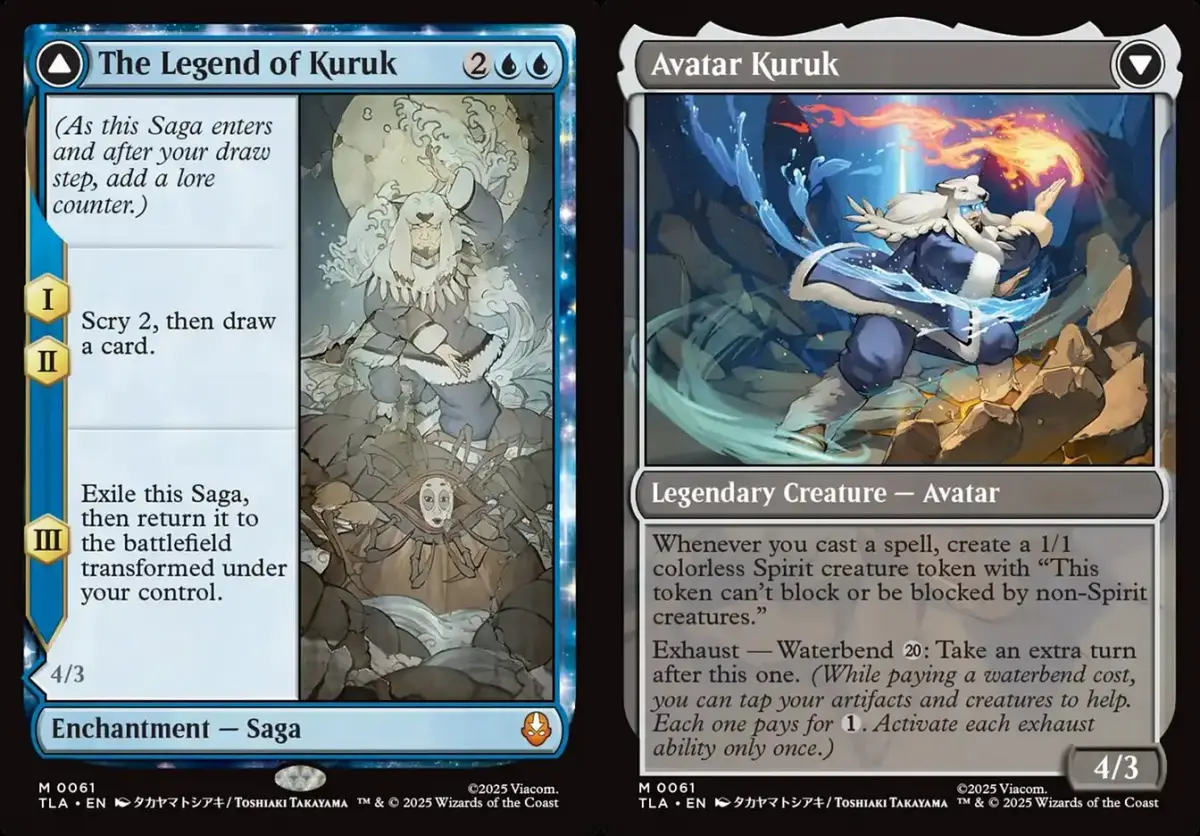
Score: 3.5
Comment: It gains resources twice by itself, and after transforming, the small creature it makes has evasion. If it survives it’s a card with a future.

Score: 2.5
Comment: A soft answer with poor card efficiency, but it will be better in sealed, and the extra Clue even means you don’t lose a card.

Score: 1.5
Comment: It mills based on the number of Lessons in your graveyard, and it’s legendary, so you can’t put out many copies at once, which greatly lowers the chance of milling out your opponent.

Score: 3.5
Comment: Creating Clues helps with waterbend, and it can also turn artifacts into 3/1 fliers that join the attack. It’s a strong card that needs to be dealt with quickly. When building, you can consider replacing some creatures with Sagas and noncreature cards that create tokens, which lets its passive ability shine even more! But don’t pick too many bad cards just because of it.

Score: 3.0
Comment: It can do something similar to ramp, and once you have overflowing mana you can specifically drop big creatures. A versatile common.

Score: 2.5
Comment: A blue Limited deck should definitely play one. It can snag a lot of good things.

Score: 2.5
Comment: The loot-and-discard system this time isn’t stable enough and it’s hard to pick perfectly, but when it works out it’s a very powerful card.

Score: 2.5
Comment: It temporarily stops the opponent’s creatures from taking part in offense and defense, but it has no offensive ability itself, so I’d rather not recommend playing it.

Score: 2.0
Comment: It should be a lot of fun in sealed, making a mess of the opponent’s attacks. In draft, the four blue mana with a specific color requirement is too heavy, and a creature is worth more.

Score: 2.5
Comment: The cost-reduction condition is fairly hard to meet, and you can’t pick many Lessons just for this card.

Score: 2.0
Comment: Spending five mana to do nothing but counter other people’s stuff is a bit crazy, but on the flip side, when you see an opponent do this you have to respect it and play the smaller threats first.

Score: 1.5
Comment: A wondrous Shrine theme. I like it, but it looks very hard to pull off. QQ

Score: 3.5
Comment: It’s not that there’s no chance to reduce the cost for waterbend. Shuffling back your graveyard and drawing seven cards is just too big an advantage.
Personal extra score: 2.5
The team gave it a high rating, but I have reservations. I think it might be playable in sealed, but in draft most of the time it’s just a plain draw 2, and it’s hard to find the gap to do the very expensive waterbend, so I’d rather use a high-cost flier to finish off the opponent.

Score: 2.5
Comment: It grows when you discard a nonland card, but your resources shrink along with it… A four-mana threat that still needs time to grow, so I think it’s just average.

Score: 1.5
Comment: It can’t even block, and you still have to spend resources on it. It’s a cat that isn’t a cat, but like a cat it goes by its mood.

Score: 3.5
Comment: Flash plus forcibly kidnapping an opponent’s creature. This honestly feels a bit over the top.

Score: 4.0
Comment: The opponent draws a second card… but I draw two! The ward cost is super hard to pay.

Score: 4.0
Comment: Casting it at six mana is its strongest point, combining a threat and card draw in one. I think casting it at five mana or less is still a slight loss, and its second ability will probably be harder to use.

Score: 3.0
Comment: Use an Aura to give creatures evasion, and after completing the quest you keep drawing cards. It’s counted separately for each creature, so you can draw a lot of cards at once and overwhelm your opponent.

Score: 2.5
Comment: When the board is even, it’s great to do a draw 3, discard 1 once. It’s also a Lesson itself, but you shouldn’t run too many card-selection effects.

Score: 2.5
Comment: It can also do waterbend itself, and it’s strong in the resource war, but it will speed up your opponent’s desire to kill you.

Score: 2.5
Comment: It can’t tap creatures itself, so it’s not so useful for decks that need to attack.

Score: 3.0
Comment: A 3/3 flying vigilance body is actually not good enough, but you can use it to do some fun things, and it can be reused, which is quite good.
Conclusion
Blue doesn’t get many creatures this time, but good fliers can be the key to winning with a deck. The biggest highlight this time is being able to refill and top off your resources. On defense, it feels as if you are blocking the opponent with a barrier of water while quietly accumulating an advantage on the side.
- Title
- Avatar: The Last Airbender (TLA) Limited Review: Blue
- Author
- jeffchen
- Created at
- November 10, 2025
- License
- This work is licensed under CC BY-NC-SA 4.0 .