Teenage Mutant Ninja Turtles Mechanics Explained

Note: This article was translated from Chinese by AI and may contain errors. Read the original Chinese version.
Mutagen Token
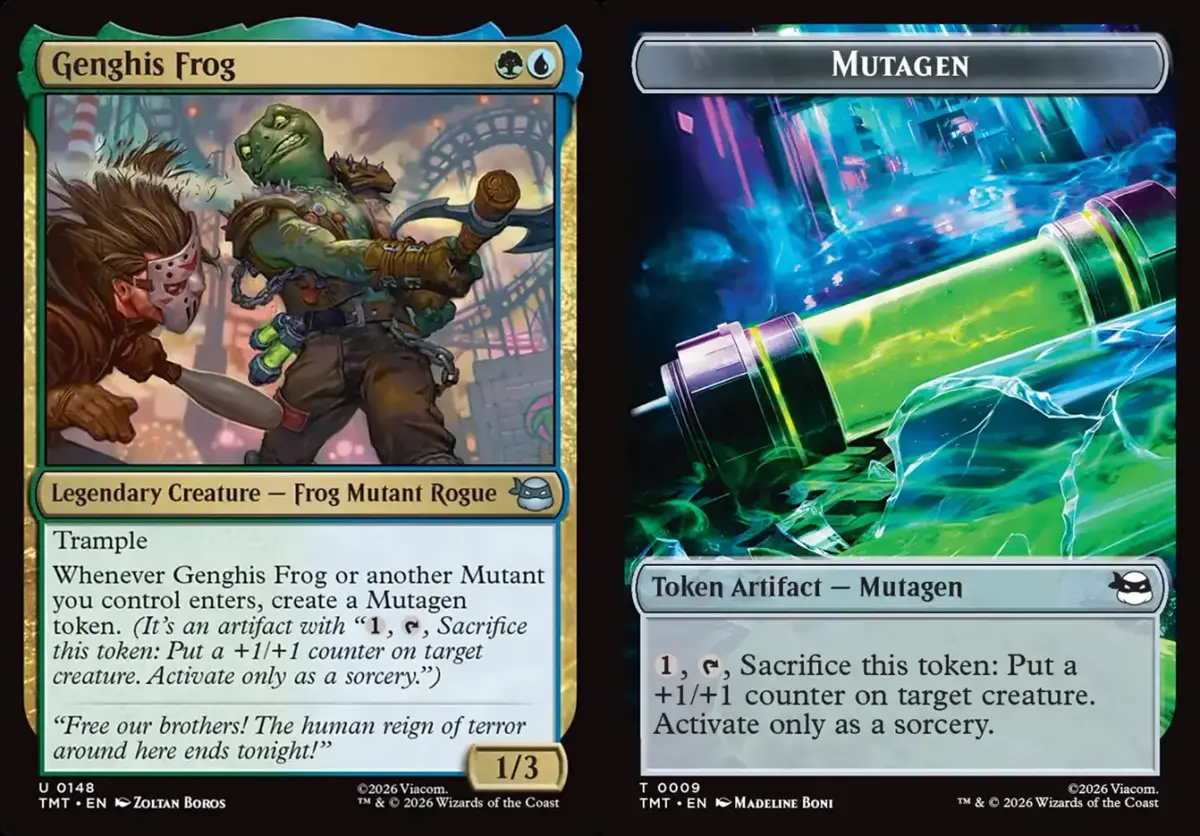
Mutagen is a new artifact token. A Mutagen token has the following ability: “{1}, {T}, Sacrifice this token: Put a +1/+1 counter on target creature. Activate only as a sorcery.”
Sneak
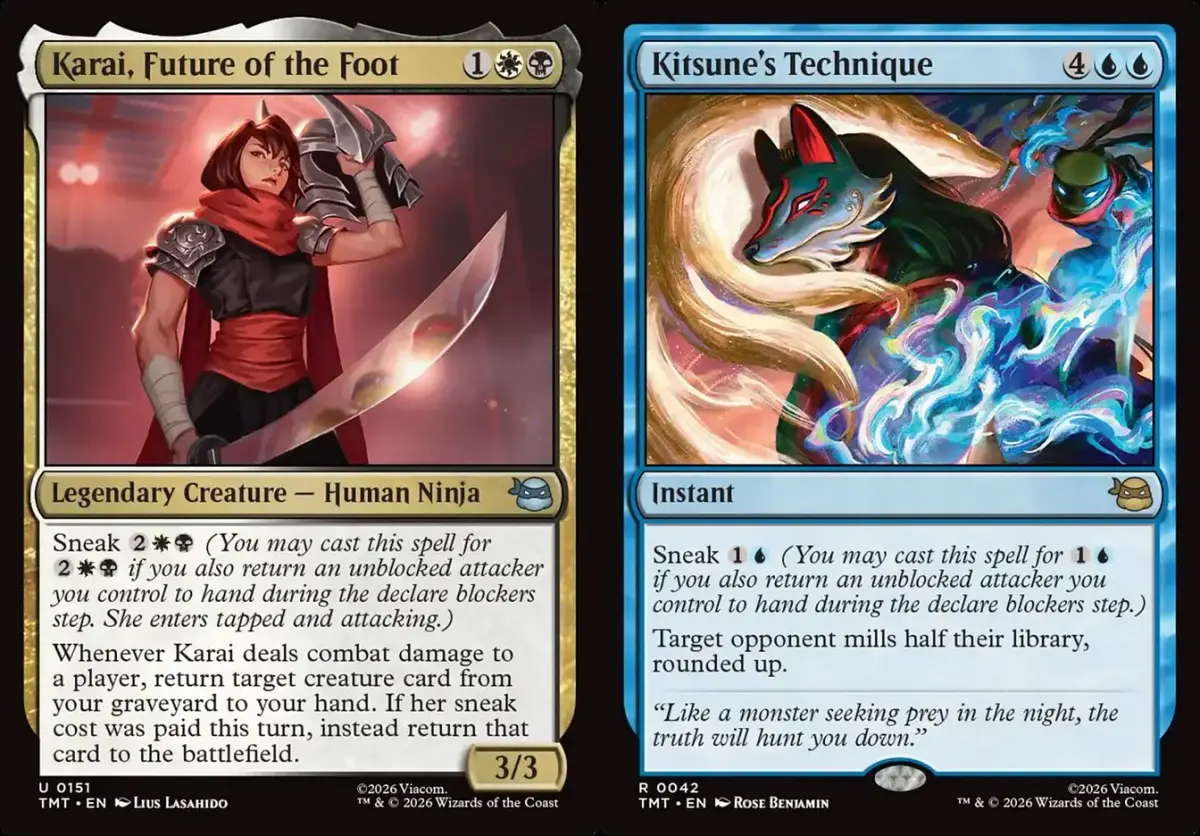
How can there be ninjas without Ninjutsu~ Huh!? There really isn’t any…? This set has no Ninjutsu, but it does have a variant of it: Sneak.
A spell with sneak has an alternative cost. During the declare blockers step of the combat phase on your turn, you can cast the sneak spell by paying the mana cost specified by sneak and returning an unblocked attacking creature you control to its owner’s hand. If the sneak spell is a creature spell, that creature enters tapped and attacking the player or permanent that the returned creature was attacking (just like Ninjutsu in the past) .
A few additional notes about sneak:
- The timing for casting a sneak spell is, simply put, after blockers are declared and before combat damage.
- Sneak lets you cast a spell at instant speed, even if the card isn’t an instant.
- Returning an attacking creature to hand is a cost of sneak. Once the player announces the sneak spell, that creature returns to its owner’s hand as a cost.
- Sneak can only be cast during the declare blockers step. This differs slightly from Ninjutsu: you can’t cast a sneak spell after combat damage but before the combat phase ends.
- Sneak is casting a spell, not an ability, so it can be responded to with permission spells such as Counterspell.
Disappear
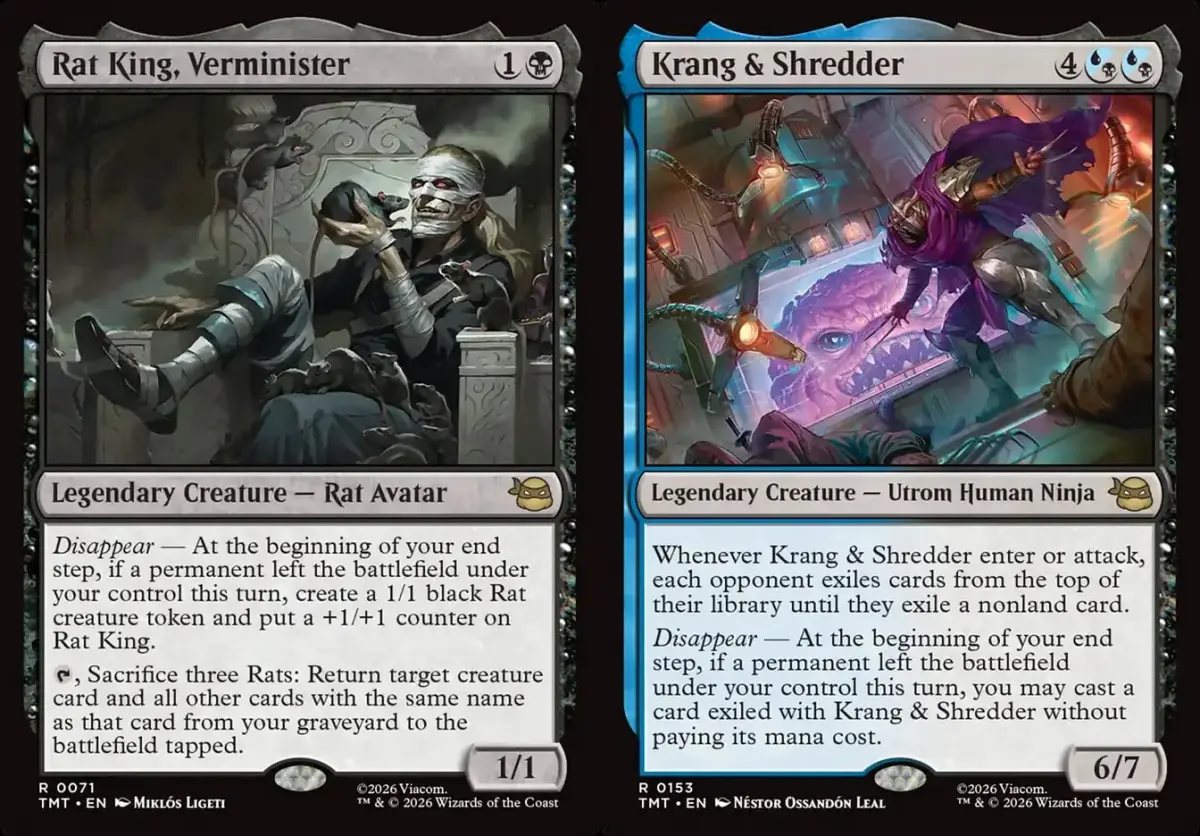
Disappear is an ability word, and its effect is always “At the beginning of your end step, if a permanent you controlled left the battlefield this turn, the following effect triggers.”
Disappear looks back at events over the entire turn. When your permanent leaves the battlefield, it doesn’t matter whether the permanent with the disappear ability is on the battlefield at that moment.
Alliance
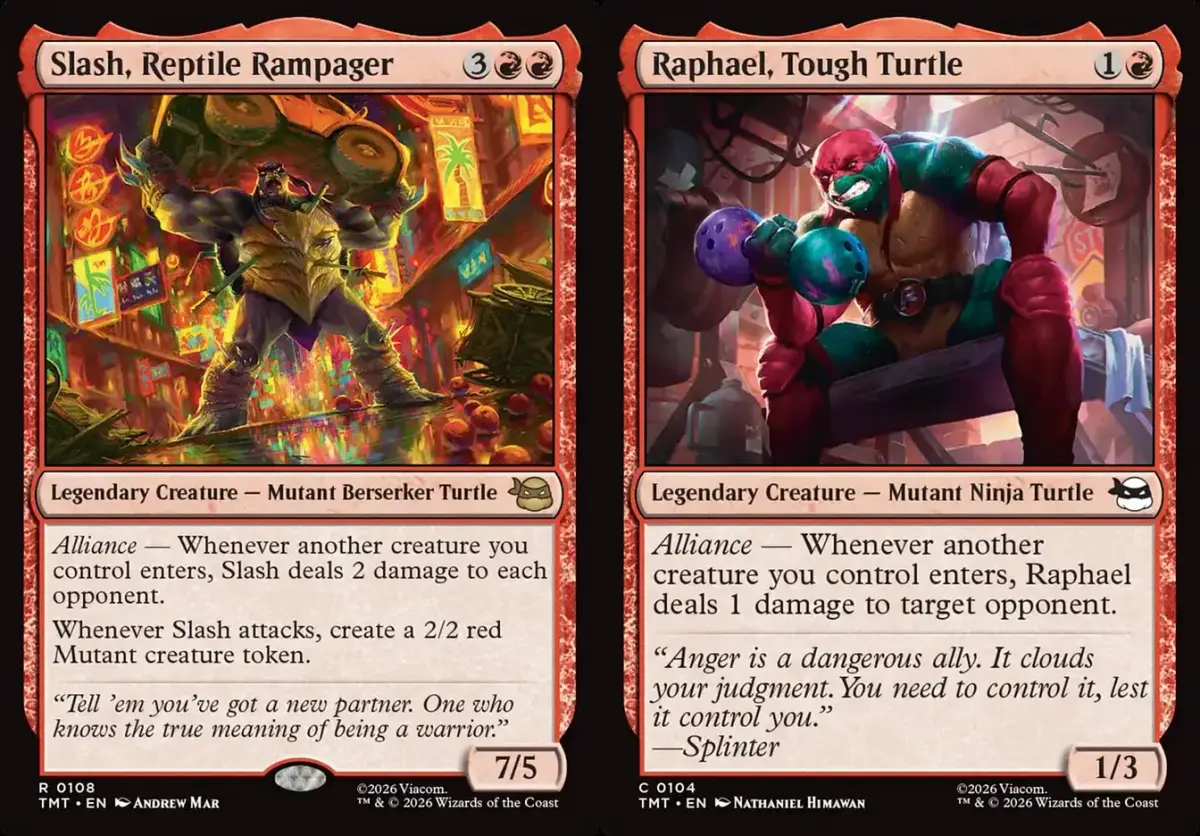
Alliance is a returning ability word from New Capenna. Alliance abilities are all triggered abilities, and the following effect triggers whenever another creature enters under your control.
Saga
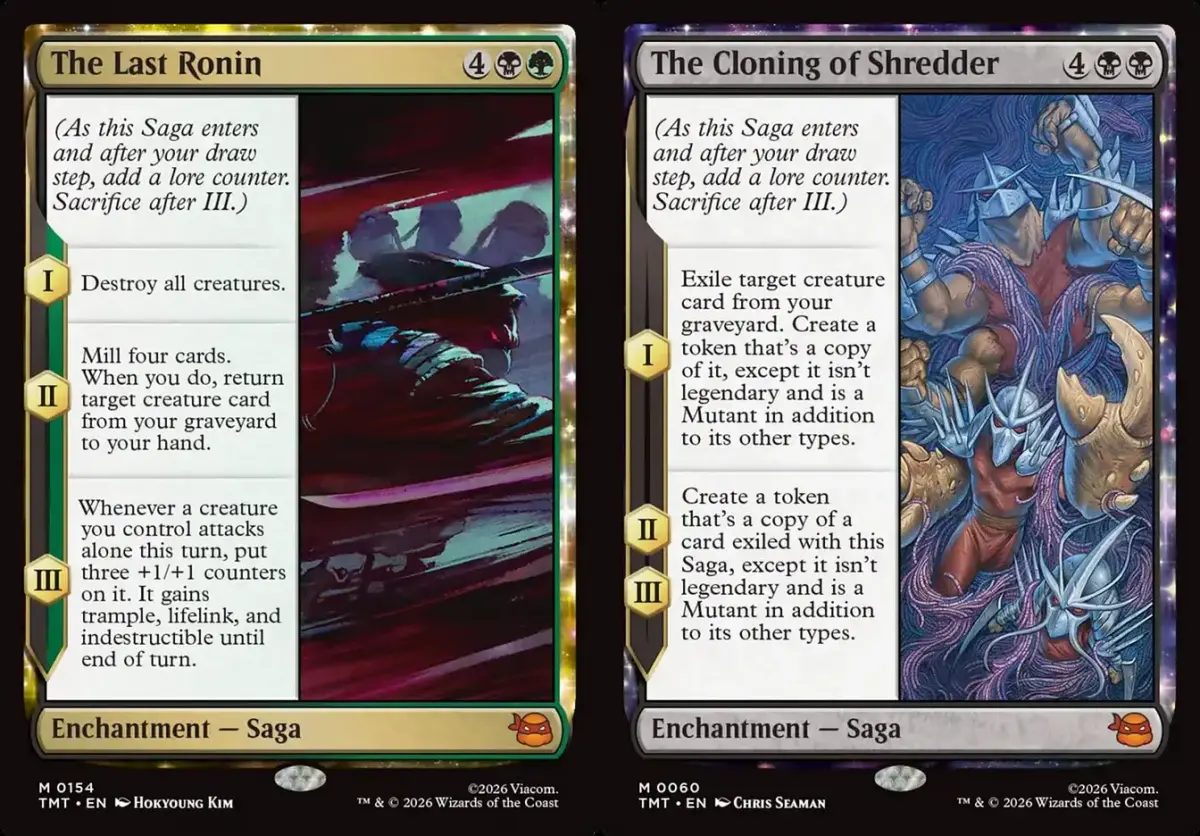
Saga is an enchantment subtype. A Saga has chapters marked with Roman numerals (I, II, III, IV …) on its left side, and each chapter has a corresponding triggered ability (a chapter ability). When a Saga enters, and at the beginning of your precombat main phase, a lore counter is put on it. Whenever a lore counter is put on a Saga, the chapter ability of the chapter equal to the number of lore counters triggers.
If the number of lore counters on a Saga is greater than or equal to the number of its final chapter, and there are no triggered abilities on the stack from a source that is this Saga (usually meaning the ability has finished resolving) , that Saga is sacrificed.
Sagas appear so often that they could practically be called an evergreen mechanic, so in some recent sets, even when Sagas appeared, they weren’t specially highlighted in the mechanics article. So why give them their own section this time? Because this set also has the following guy at the same time…
Class
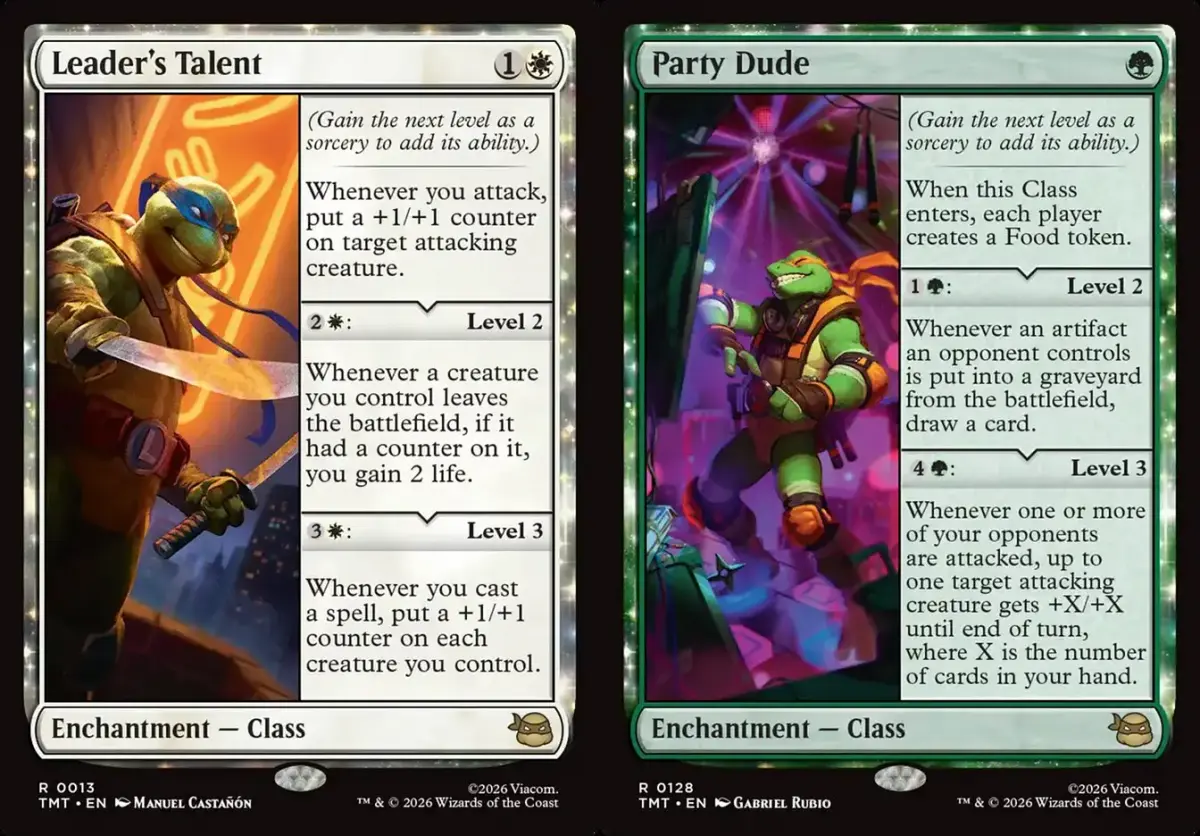
Class is an enchantment subtype with its own dedicated rules, and although it looks quite similar to the Saga above, the rules are completely different.
Which genius came up with the idea of putting Classes and Sagas in the same set? Aren’t they afraid of confusing new players…?
Classes all have three tiers of class abilities, namely LV1, LV2, and LV3. Whatever your current class level is, the permanent has the class abilities of that level and of the lower levels before it. For example, if it is currently LV1, it only has the LV1 abilities, and when the Class becomes LV2, it has both the LV1 and LV2 abilities.
Classes always enter at LV1. To raise a Class’s level, you need to use the class level-up ability, which is the activated ability at the top row of each LV. It is a sorcery-speed activated ability, and declaring this level-up ability can itself be responded to.
Commander Mechanic: Partner — Character select
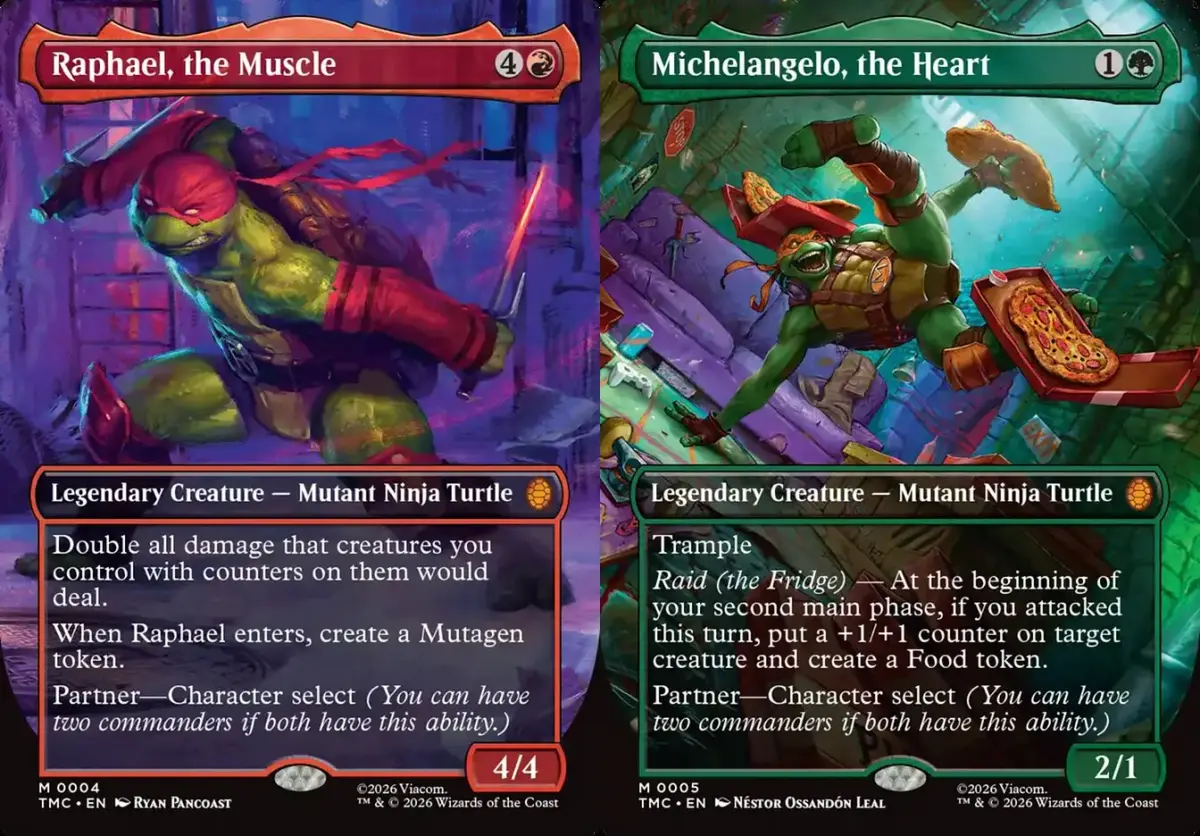
You can have two cards with the Partner — Character select ability serve together as your commanders. In that case, the combination of the color identities of these two cards defines which cards can go in your Commander deck.
Note in particular that Partner — Character select can only be set as co-commanders with another card that also has Partner — Character select, and is not compatible with the Partner that has appeared in the past or other Partner variants.
- Title
- Teenage Mutant Ninja Turtles Mechanics Explained
- Author
- Jru
- Created at
- February 20, 2026
- License
- This work is licensed under CC BY-NC-SA 4.0 .