Star Trek Mechanics Explained

Note: This article was translated from Chinese by AI and may contain errors. Read the original Chinese version.
Spacecraft & Station
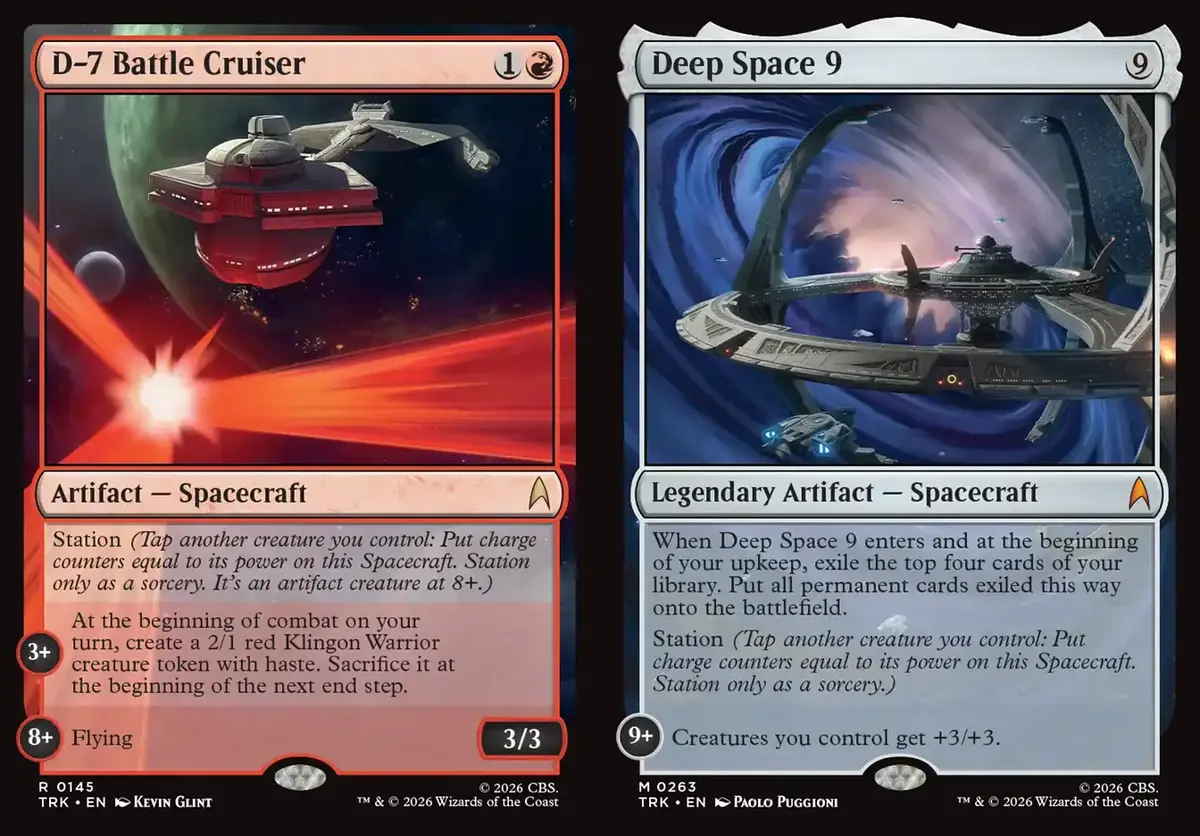
Spacecraft is an artifact type. They all start as noncreature artifacts and all have the Station ability.
Station is a sorcery-speed activated ability, and its rule is:
Tap another untapped creature you control: Put charge counters on this permanent equal to the tapped creature’s power.
As long as the number of charge counters on the Spacecraft is ≥ the number on the left of the text box, it gains the abilities on the right of the text box. Some Spacecraft, once they have enough charge counters, can become artifact creatures, with the power/toughness specified on the right of the text box.
Even if your creature entered this turn, you can still tap it to pay Station’s tap cost. Station doesn’t check whether the creature has summoning sickness.
Beam Me Up
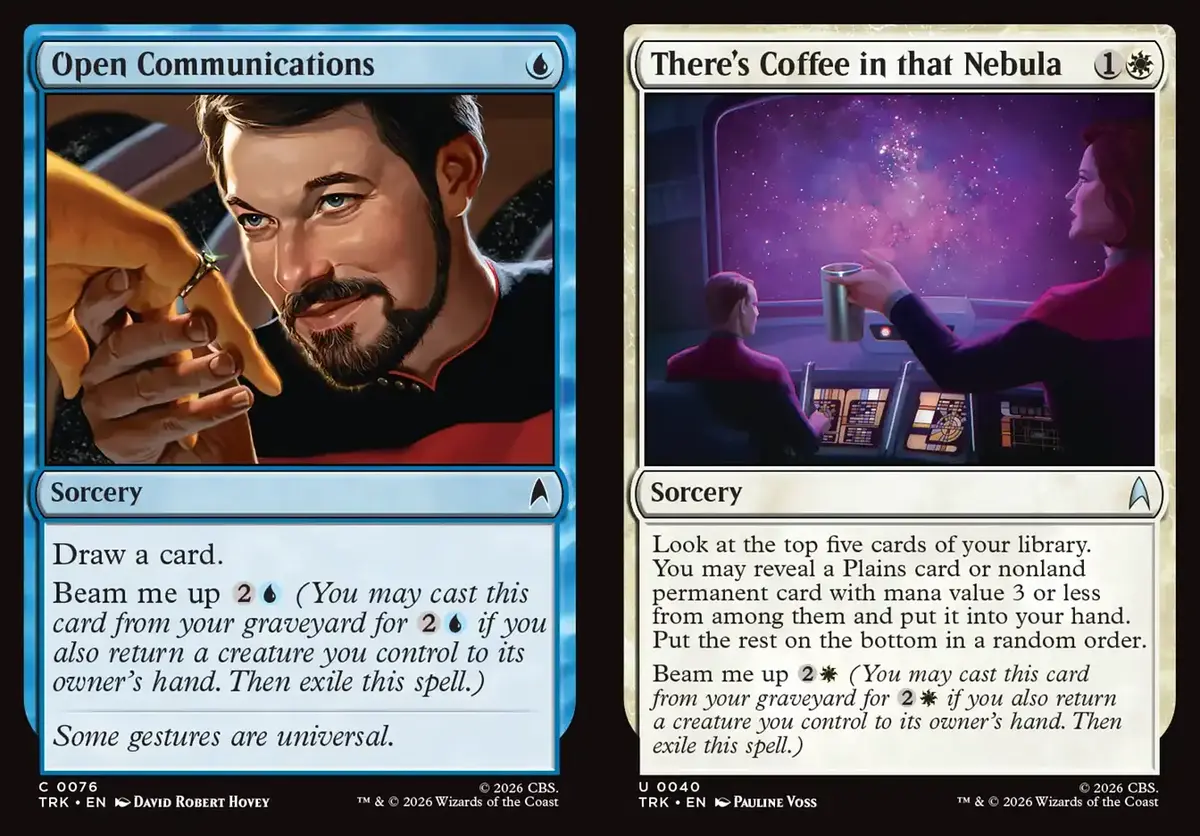
Beam Me Up appears on instants and sorceries. You can cast an instant or sorcery spell with Beam Me Up from your graveyard, paying the alternative cost specified by Beam Me Up instead of the spell’s original cost.
This alternative cost includes the specified mana cost and returning a creature you control to its owner’s hand. Because returning the creature to hand is part of the cost, the creature is already back in hand when you announce the spell, so the opponent can’t respond to the creature being returned as Beam Me Up’s cost with instant-speed creature removal.
If a spell cast with your Beam Me Up would leave the stack (whether it resolves successfully, is countered, or any other special circumstance), exile it instead of putting it into any other zone.
Beam Me Up doesn’t change when the spell can be cast. You still have to follow the timing of its original type. Beam Me Up also doesn’t change the spell’s mana value.
Face a Dilemma
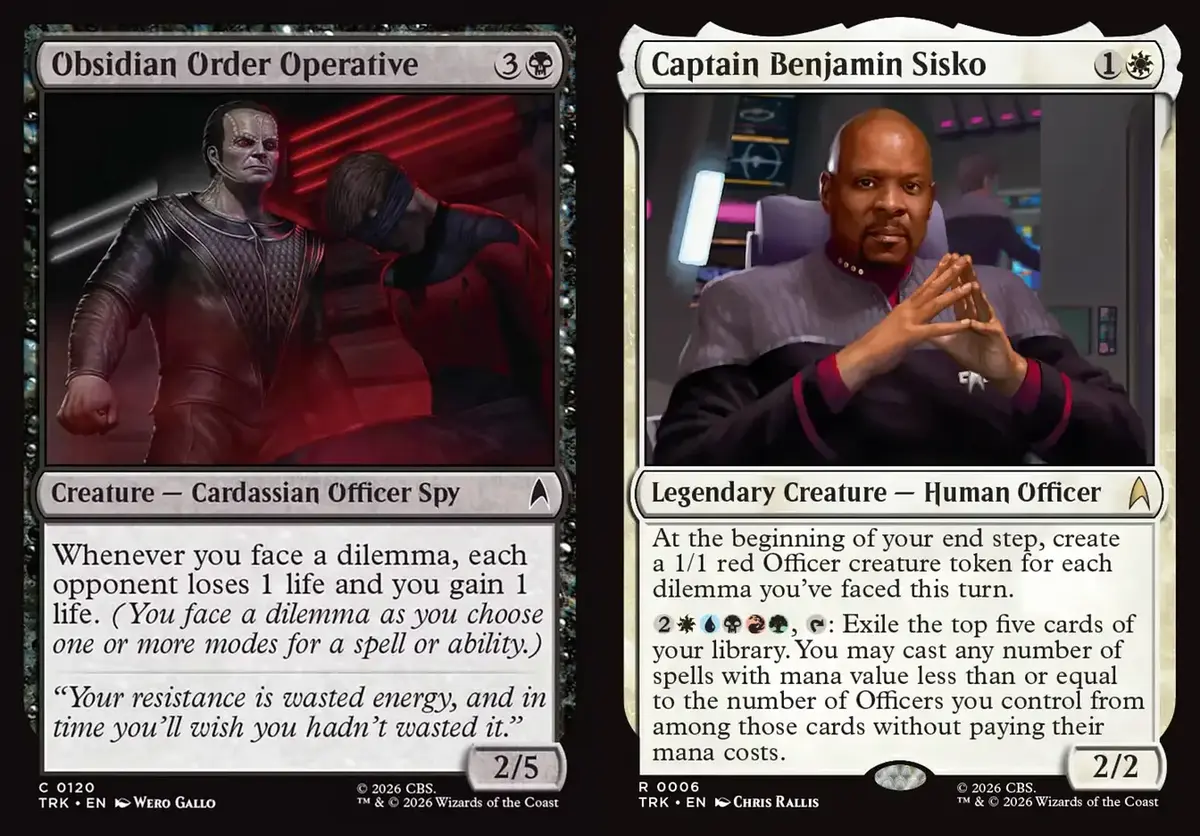
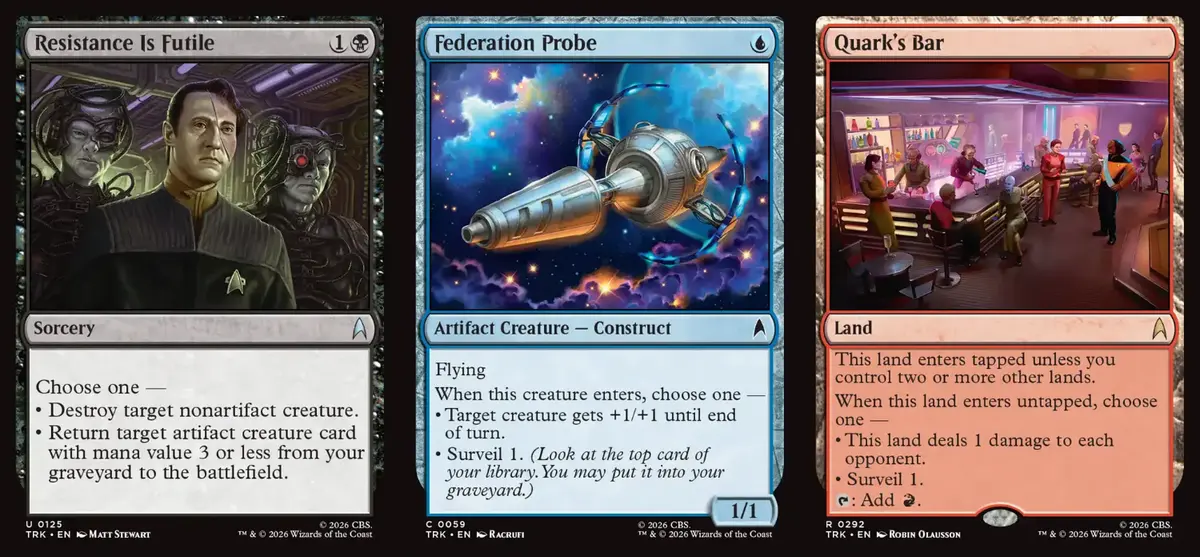
When you choose modes for a modal spell or ability, you have faced a dilemma once. Some effects trigger when you face a dilemma, and others check the number of times you’ve faced a dilemma this turn.
Facing a dilemma only requires that you chose modes. That is, the spell or ability just has to go on the stack after the modes are chosen. Whether it ends up resolving successfully, being countered, or failing to resolve for other reasons such as illegal targets doesn’t matter.
Some effects that choose modes let you choose multiple modes or choose modes multiple times, but no matter how many modes or how many times you end up choosing, one modal spell or ability counts as facing a dilemma only once.
If a modal triggered ability has no legal mode to choose when its trigger condition is met (usually because every mode has a target but there is currently no legal target), that ability doesn’t go on the stack, and you can’t satisfy the condition for facing a dilemma.
Example of a modal card:
Strange New Worlds
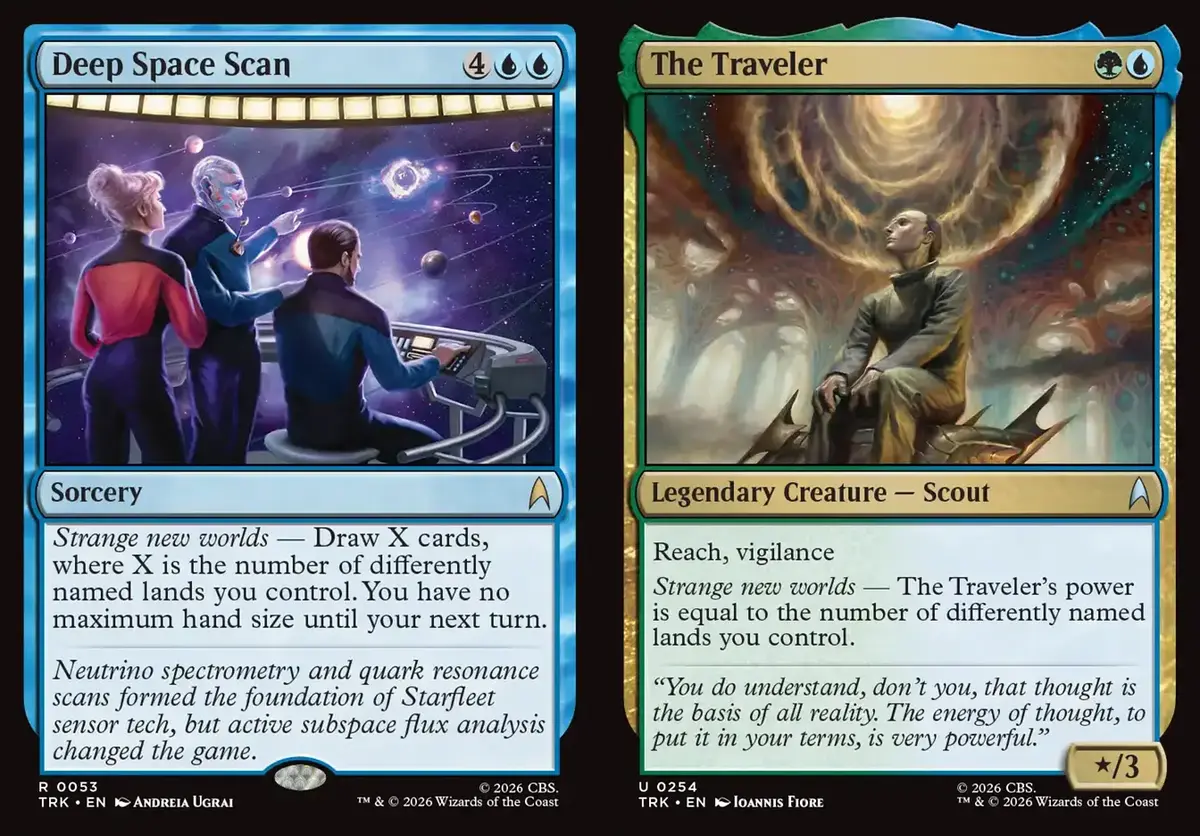
Strange New Worlds is an ability word. These effects check the number of differently named lands you control.
Federation
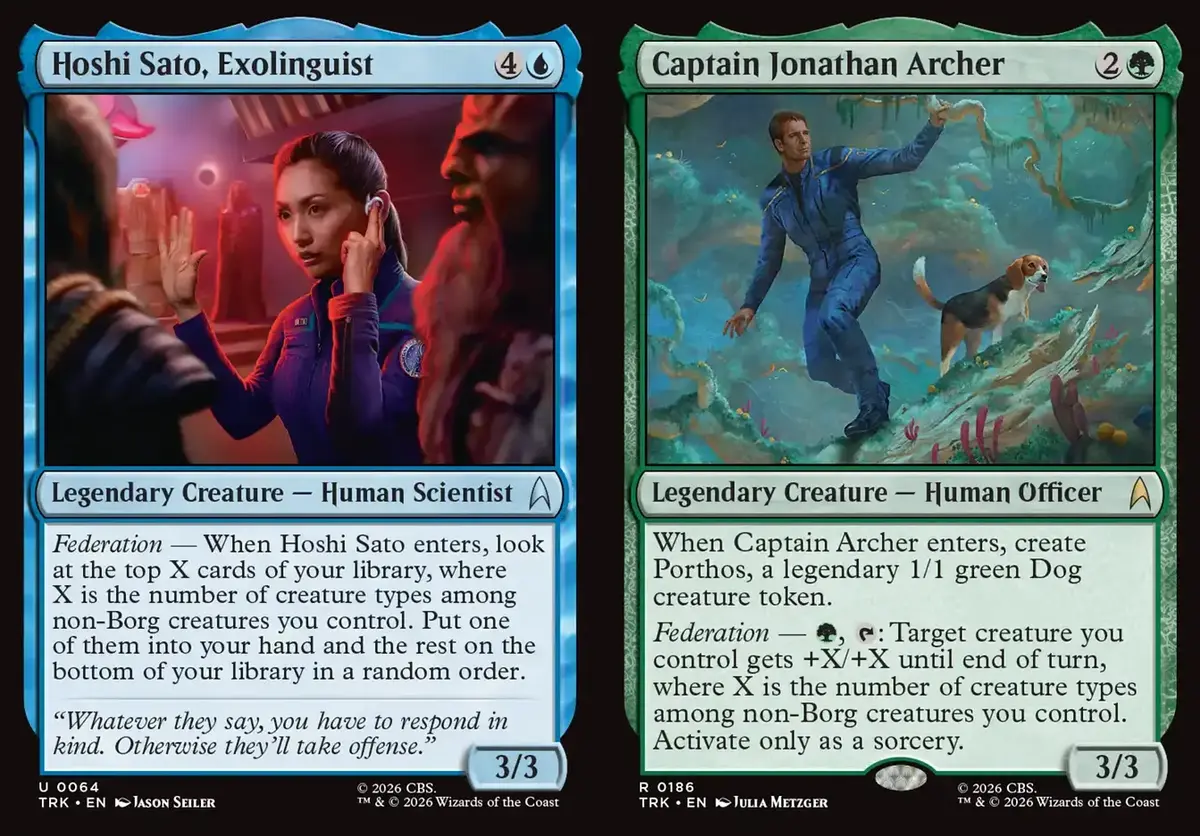
Federation is an ability word. It checks the number of creature subtypes among non-Borg creatures you control. A subtype counts as 1 no matter how many creatures have it at the same time.
Suppose you control only the two creatures in the example image above. Then the Federation value is 3 (Human, Scientist, Officer).
Although Changeling creatures have every creature subtype, that includes Borg, so changeling creatures are ignored by Federation.
Assimilate
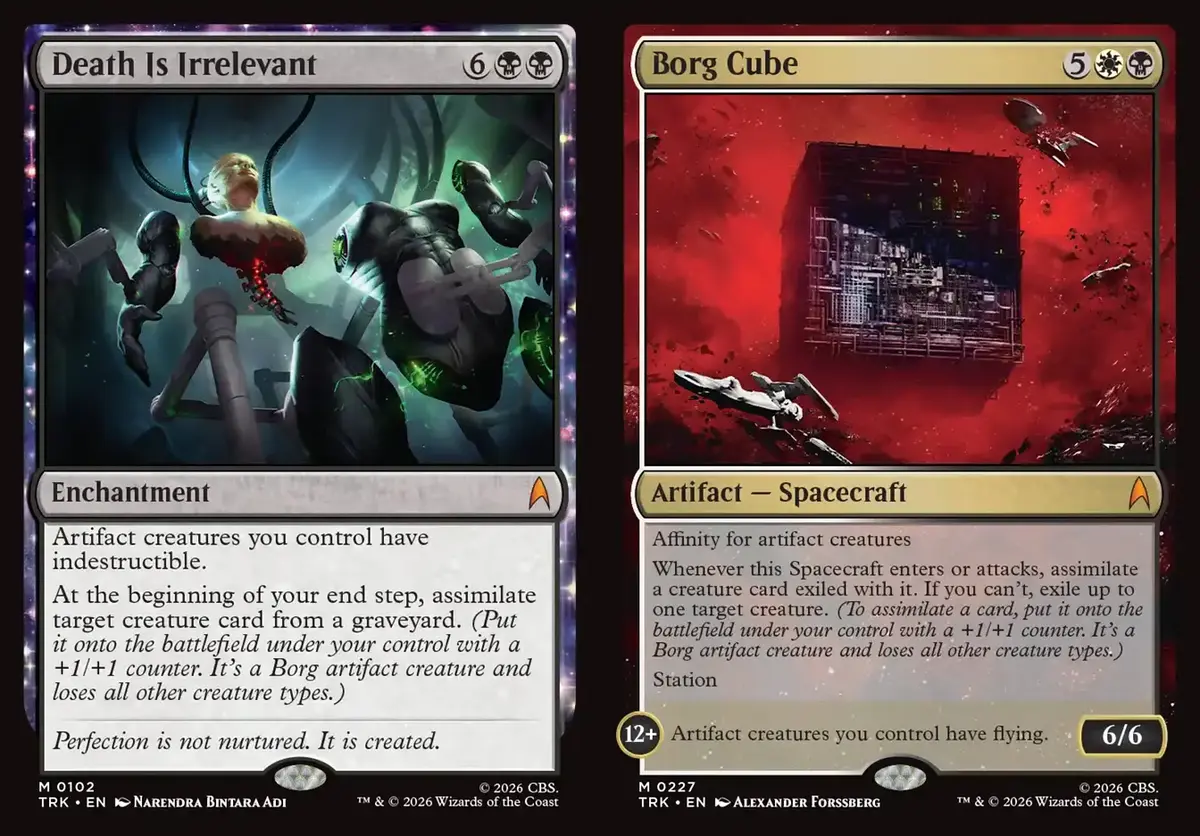
If an effect has you assimilate a creature card that isn’t on the battlefield, put it onto the battlefield under your control with a +1/+1 counter on it. If the effect has you assimilate a creature already on the battlefield, you gain control of that creature and then put a +1/+1 counter on it.
Assimilate also modifies the creature’s types, making it a Borg artifact creature, and it loses its other creature subtypes. If the card has other card types, supertypes, or subtypes of noncreature types, those are kept.
- Title
- Star Trek Mechanics Explained
- Author
- Jru
- Created at
- October 26, 2026
- Updated at
- October 30, 2026
- License
- This work is licensed under CC BY-NC-SA 4.0 .